
Black Mold Remediation
Dark or black-colored mold growth in a Westerville home or business needs a professional look — color alone doesn't tell you what species you're dealing with or how serious the situation is.
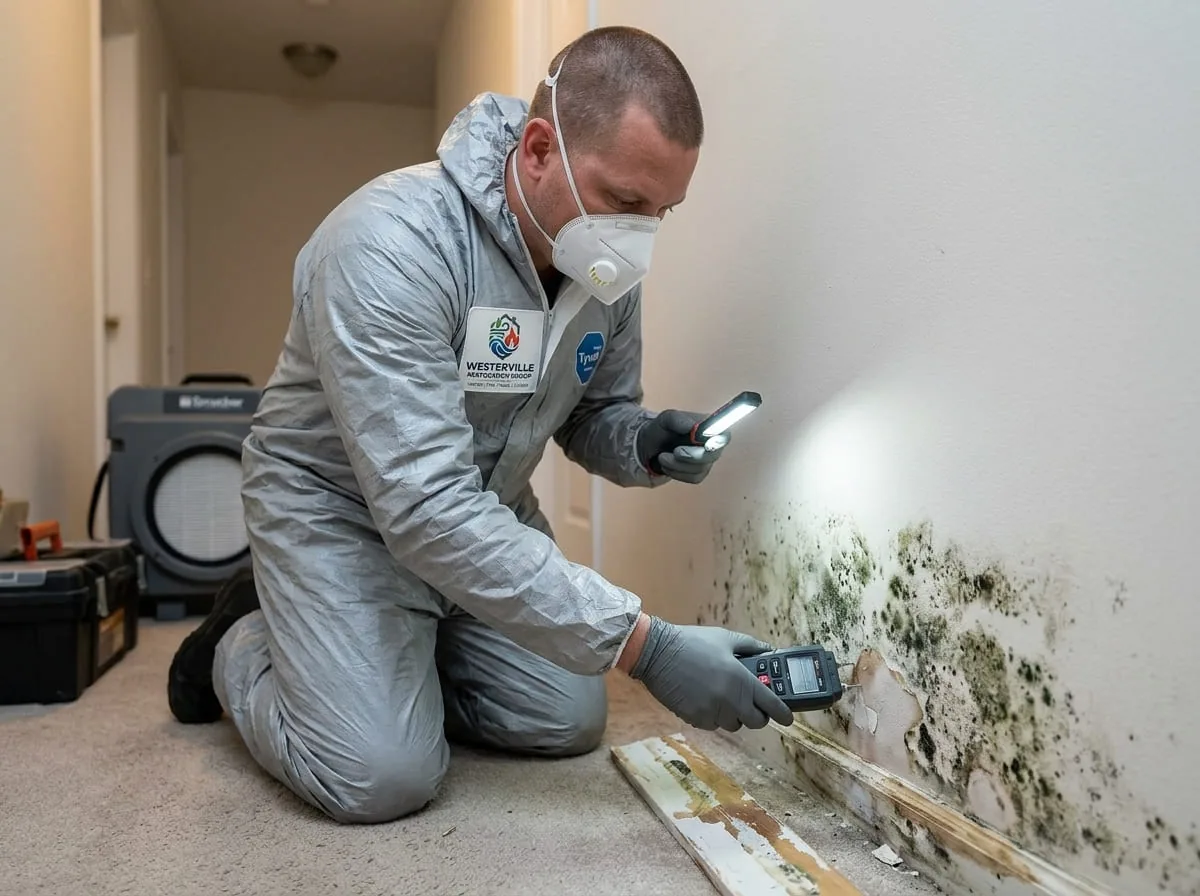
"Black mold" is one of the most commonly searched mold terms, and also one of the most misunderstood. A wide range of mold species can appear black, dark green, or nearly charcoal-colored, and visual color alone isn't a reliable way to identify what's actually growing or how it should be handled.
What matters more than the color is the extent of the growth, what material it's growing on, and how it got there. This page covers when dark mold growth calls for professional remediation rather than a quick DIY wipe-down, and what that remediation process typically involves.
What 'Black Mold' Usually Means
Several common household mold species can appear dark or black, and identifying the exact type generally requires a sample sent to a lab rather than a visual guess. That distinction matters less for how remediation is approached — dark-colored mold on drywall or framing is treated with the same containment and removal process regardless of species — but it matters for avoiding unnecessary alarm or, just as importantly, avoiding false reassurance based on appearance alone.
When Dark Mold Growth Needs Professional Remediation
A small, isolated spot is a different situation than an established colony, and several factors point toward calling a professional rather than handling it yourself.
- The affected area covers more than a small, isolated spot
- Growth is on a porous material — drywall, wood framing, carpet, insulation — rather than tile or another hard surface
- Mold is inside or near HVAC ductwork, which can spread spores through the whole building
- The growth has come back after a previous cleaning attempt
- It followed a water loss significant enough to soak structural materials
What Professional Black Mold Remediation Typically Involves
Remediation generally starts with containing the work area using poly sheeting and negative air pressure so spores disturbed during removal don't spread to unaffected parts of the building. Technicians working in the containment typically wear appropriate personal protective equipment, remove and bag materials that can't be cleaned, and use HEPA vacuuming and antimicrobial treatment on surfaces that can be salvaged.
Once the visible remediation work is complete, a clearance or post-remediation verification step is often recommended, particularly for larger jobs, to confirm the area is ready to be closed back up or returned to normal use.
Frequently Asked Questions
Does black-colored mold always mean it's dangerous 'toxic mold'?
Not necessarily, and it's not something to assume either way based on color alone. "Toxic black mold" is a commonly used but often overstated term — a range of species can appear dark or black, sensitivity to mold varies from person to person, and a professional inspection is a more reliable way to understand what you're dealing with than trying to judge severity by sight.
Can I clean black mold myself with bleach?
For a very small, isolated spot on a hard, non-porous surface, basic household cleaning may be an option. Larger areas, mold on porous materials like drywall or wood, or growth that keeps returning shouldn't be handled with a DIY bleach approach — proper containment and removal generally requires more than surface cleaning, and improper handling can spread spores further into the space.
Do I need mold testing before black mold remediation can start?
Usually not if the growth is already visible — most remediation can proceed directly to containment and removal. Testing tends to be more useful when you need documentation, when growth is suspected but not visible, or as part of clearance testing after the work is finished.
How long does black mold remediation take?
It depends on how much area is affected and what materials are involved, so there's no fixed timeline that applies to every job. A professional inspection is what determines the actual scope and, from there, a realistic estimate for the work involved.
Related services
Nearby service areas
Seeing Dark or Black Mold Growth?
Get matched with a specialist who can assess it properly instead of guessing based on color.
Call Now for Water Damage Help