
Water Damage Restoration in Gahanna, OH
Gahanna sits directly downstream of Westerville on Big Walnut Creek, adding creek-corridor flood exposure on top of the basement and sump pump risk common to Central Ohio homes.
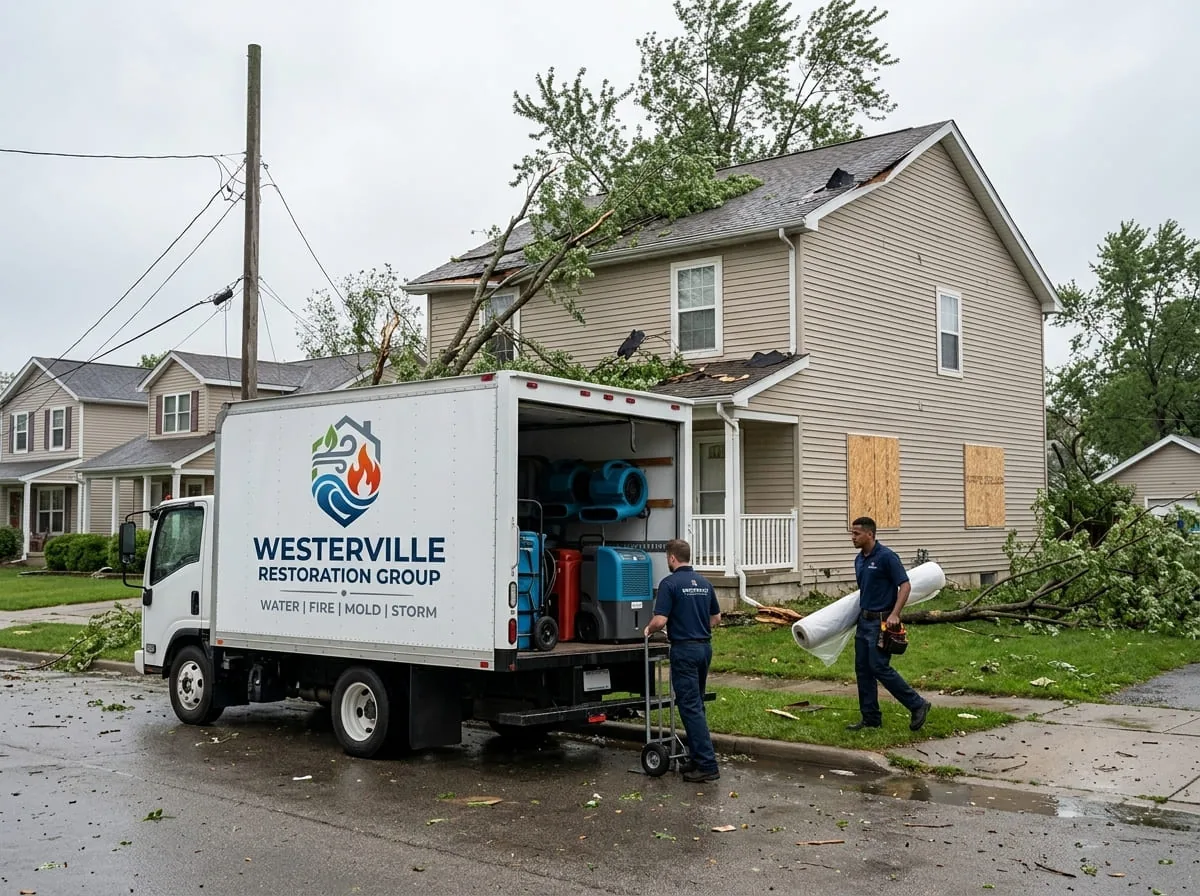
Big Walnut Creek flows out of the Hoover Reservoir in Westerville and continues directly through Gahanna toward Whitehall, which puts Gahanna in a genuinely different flood position than communities farther from that corridor. Heavy regional rainfall affecting the reservoir's watershed has a real, downstream relationship to localized flood risk inside the city.
The older residential core around Olde Gahanna carries meaningfully aged plumbing and drainage infrastructure, while the subdivisions built across the rest of the city from the mid-20th century onward through more recent development represent a much wider span of construction eras. Whether a home has original galvanized supply lines or newer copper or PEX plumbing changes which kind of failure is more likely, but it does not change the fact that a poured concrete basement is the standard foundation type either way.
Basements and sump pumps are a standard feature of homes across Gahanna, consistent with the rest of Central Ohio. A sump pump that fails during a heavy rain event or a power outage is one of the most common sources of basement water intrusion calls in this market, and Gahanna's position on the Big Walnut Creek corridor means saturated ground and elevated creek levels during major storms can make an already-strained sump system work even harder.
Gahanna's growth from its original 1849 town site into a much larger Franklin County suburb means the distance from the creek corridor to a given property, not just the age of the home, is worth factoring into a homeowner's sense of flood risk. A property several blocks from the creek still carries the standard Central Ohio basement and sump-pump exposure even where direct creek flooding is unlikely.
Central Ohio's humid continental climate adds a seasonal dimension on top of these year-round basement and creek-corridor risks in Gahanna. Winters bring repeated freeze-thaw cycling that stresses aging supply lines and foundation walls alike, while summer thunderstorms bring the heavy, fast rainfall most likely to overwhelm a sump system or push the creek toward its banks.
Water Damage Restoration in Gahanna
Basement flooding is the most common water damage scenario restoration professionals respond to in Gahanna, whether the cause is a failed sump pump, foundation seepage through aging block walls, or a window well that overflows during a heavy downpour. Central Ohio's basement-dominant construction means this is treated as the standard case here, not an unusual one.
Gahanna's location downstream of Westerville on Big Walnut Creek adds a second layer of exposure during major regional rain events, when saturated soil and elevated creek flow can push groundwater against foundation walls at the same time a home's sump system is already working near capacity.
Burst and frozen pipes are a regular winter call across Gahanna's older housing stock, where original supply lines running through unheated crawl spaces, exterior walls or unconditioned areas see repeated freeze-thaw cycling every winter. Newer subdivisions built with copper or PEX lines are less prone to that specific failure but remain exposed to appliance connector failures, water heater ruptures and the same basement moisture risk as the rest of the city.
Restoration work is carried out by trained technicians using professional extraction and drying equipment, with structural drying and dehumidification timelines depending on how much of the basement or living space absorbed water and how quickly the loss was reported.
Sewage backup is a separate but related concern during major storm events, when heavy inflow can overwhelm household or municipal drainage capacity faster than usual. A sewage-contaminated water loss is handled differently from clean supply-line water and calls for its own dedicated cleanup approach rather than standard extraction alone.
Whichever cause is behind a Gahanna water loss, the response sequence generally follows the same order: stop the source of water where possible, extract standing water, then dry and monitor the affected structure until moisture readings confirm the materials are actually dry rather than simply dry to the touch.
Fire Damage Restoration in Gahanna
House fires create both direct fire damage and a secondary water damage problem, since firefighting operations often leave a structure soaked in addition to burned. Properties in Gahanna dealing with fire damage typically need both smoke and soot cleanup and water extraction addressed together, particularly in basements where runoff from upper floors collects.
Restoration professionals handling fire losses in Gahanna coordinate smoke odor removal, structural drying from firefighting water, and board-up or tarping to secure the property while repairs are arranged.
In homes near the older Olde Gahanna core, fire and water response can also involve original building materials that need more careful handling than the drywall and engineered flooring typical of newer construction elsewhere in the city.
Emergency board-up and tarping are often arranged immediately after a fire to secure windows, doors or a damaged roofline, protecting the property from weather exposure and further loss while the rest of the restoration plan comes together.
Mold Remediation in Gahanna
Humid Central Ohio summers mean damp material left standing after any water intrusion, whether a basement flood, a slow roof leak, or firefighting runoff, can become a mold concern within 24 to 48 hours. Finished basements are a particular concern in Gahanna because moisture can get trapped behind drywall and flooring long after the surface appears dry.
Mold remediation following a Gahanna water loss typically starts with identifying the moisture source, since remediation performed without correcting an active sump pump or foundation leak problem tends not to hold.
Properties near the Big Walnut Creek corridor that experience recurring seasonal moisture, even minor seepage that never rises to the level of a full basement flood, are worth monitoring for mold over time rather than only after an obvious water event.
A mold inspection following a Gahanna water loss typically checks both the immediately affected area and adjacent spaces, since airflow and moisture can carry a problem beyond the room where the original water intrusion occurred.
Big Walnut Creek, Hoover Reservoir and Storm Flooding in Gahanna
Big Walnut Creek flows out of the Hoover Reservoir in Westerville and continues directly through Gahanna on its way toward Whitehall. That means heavy regional rainfall affecting the reservoir's watershed has a direct, downstream relationship to flood risk along the creek corridor inside Gahanna, a localized exposure that sits on top of, not instead of, the basement flooding that affects homes throughout this market.
During a major regional storm, saturated ground and elevated creek flow near that corridor can put extra pressure on a home's foundation and drainage at the same time its sump system is already working at capacity, which is one reason storm season calls from Gahanna often involve more than one water entry point at once.
What to Do Before Restoration Professionals Arrive
If a basement or lower level is actively taking on water, safety comes before cleanup. If it is safe to do so, shut off power to the affected area at the breaker rather than the outlet itself, and avoid walking through standing water anywhere near outlets, cords or a water heater.
Photograph the damage before moving furniture or belongings, note when the water was first noticed, and if the source is a visible supply line or appliance, shutting off that fixture's water supply can limit how much worse the loss gets before help arrives.
Category of Water and Why Response Speed Matters
Restoration professionals classify water losses by category, largely based on how clean or contaminated the water is. Clean supply-line water is treated differently than water that has picked up soil or organic material from a creek-adjacent yard or a saturated foundation, which is a real consideration for Gahanna properties near the Big Walnut Creek corridor.
A slower response window doesn't just mean more standing water, it also means more time for water to travel into wall cavities, under flooring and behind baseboards, all of which extends the drying process. That's part of why the same volume of water can result in very different restoration timelines depending on how quickly it's addressed.
For Gahanna properties near the creek corridor specifically, a water loss that coincides with a major regional storm sometimes involves more than one category of water at once, clean rainwater in one area and contaminated groundwater or backed-up drainage in another, which is part of why an on-site assessment matters before assuming a single, simple cleanup approach will cover the whole loss.
Insurance and Documentation After a Water Loss
Sudden, accidental water damage, such as a burst pipe or a sump pump that fails without warning, is often covered under a standard homeowners policy, while gradual seepage and sewer backup frequently require a separate endorsement that not every policy includes.
Photographing the damage before cleanup begins, keeping a simple written record of when the water was first noticed, and holding onto any repair estimates or receipts all help support a claim, whether the loss is tied to a basement sump pump or to storm water along the Big Walnut Creek corridor.
Gahanna Water Damage FAQs
Is basement flooding really common in Gahanna, or is my home unusual?
It's common. A poured concrete basement is the standard foundation type across Central Ohio, including Gahanna, so sump pump failure and foundation seepage are routine water damage calls rather than rare events.
Does Gahanna's location on Big Walnut Creek increase flood risk?
Big Walnut Creek flows from the Hoover Reservoir in Westerville directly through Gahanna, so heavy regional rainfall can raise creek levels and saturate ground along that corridor in addition to the basement and sump pump flooding common throughout the area. Water that has picked up soil or organic material from that corridor is also classified and cleaned up differently than clean supply-line water.
How fast does mold set in after a basement floods?
In warm, humid conditions, which describes a typical Central Ohio summer, damp materials can become a mold concern within 24 to 48 hours. That's why prompt extraction and drying matters more than the size of the initial water loss.
Will homeowners insurance cover a sump pump failure in Gahanna?
It depends on the policy. Many standard homeowners policies exclude sump pump failure and sewer backup unless a specific endorsement was added, so it's worth checking policy language and photographing the damage before cleanup begins.
What should I do before restoration technicians arrive after a basement flood?
If it's safe, shut off electricity to the affected area, avoid walking through standing water near outlets or appliances, and take photos of the damage for insurance purposes before moving anything.
Does the age of my supply lines matter if I live in a newer Gahanna subdivision?
Newer Gahanna homes are more likely to have copper or PEX supply lines, which are less prone to age-related corrosion than older galvanized pipe, but they're not immune to appliance connector failures, water heater ruptures, or the basement and sump pump risk shared across the whole city.
Nearby Service Areas
Get Water Damage Help in Gahanna
Every call from Gahanna is routed to a restoration professional ready to respond to basement flooding, burst pipes and storm water damage.
Need Help Now? Call (614) 665-8102