Mold After Water Damage
When a pipe bursts, an appliance overflows, or a storm floods part of your Westerville home, the clock on mold starts almost immediately — here's what a fast response looks like.
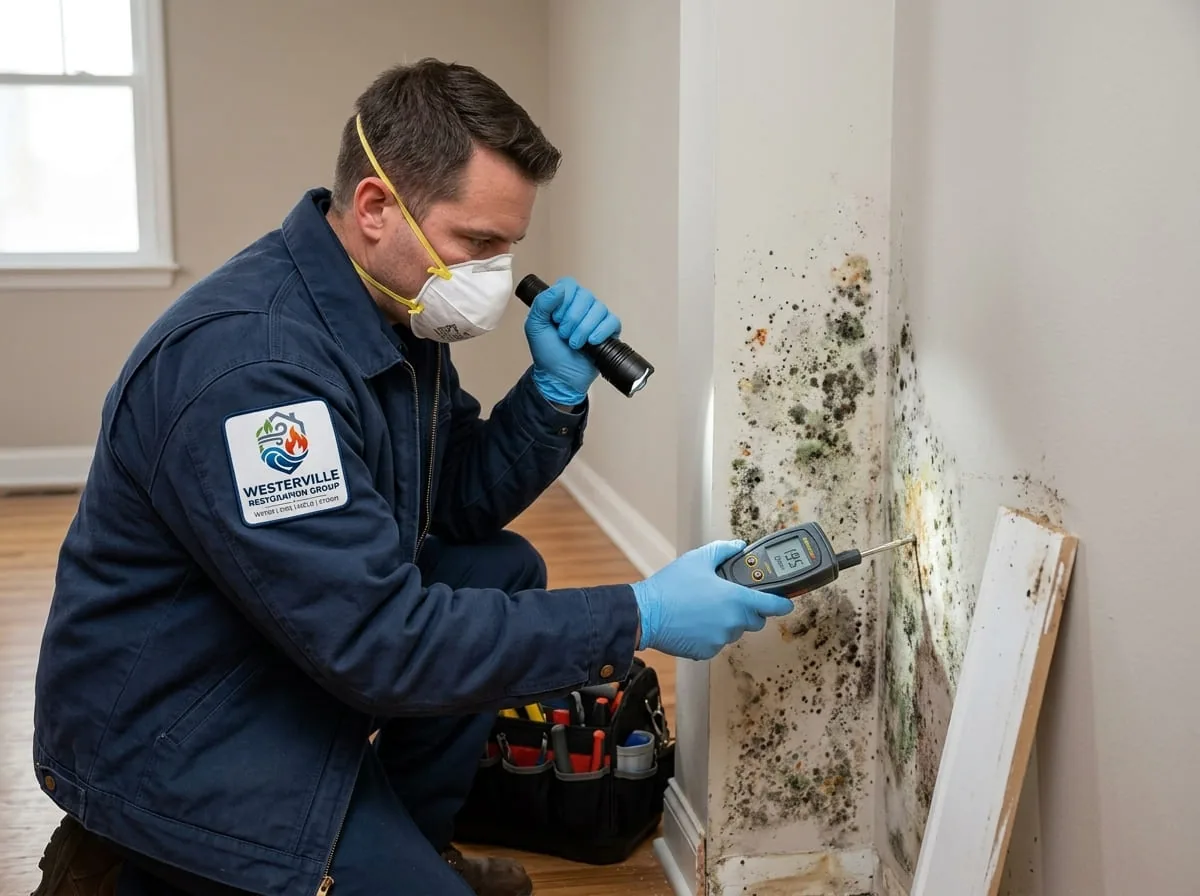
Water damage and mold are two sides of the same problem. Whether the source was a burst supply line, a failed water heater, or a basement that took on water during a heavy storm, any material left wet for more than a day or two in Central Ohio's humid summer air is at real risk of developing mold — often in places you can't see until it's already established.
This page covers what typically happens after water damage when mold has already started, or is likely to if drying isn't handled quickly and correctly. Calls are routed to restoration professionals who can address both sides of the job: getting water out and materials dry, and remediating any mold that's already taken hold.
Why Mold Follows Water Damage So Quickly Here
Central Ohio's warm, humid summers shorten the window between a water loss and a mold problem. Damp drywall, subfloor, and framing that sit in a warm, poorly ventilated space — a closed-up house during a vacation, a finished basement, a slow leak behind a wall — can begin growing mold in as little as 24 to 48 hours.
Winter carries its own version of the same risk: freeze-thaw cycles that cause a supply line to burst often go undiscovered for hours or days if they happen in an unfinished basement or behind a wall, giving moisture time to soak into materials before anyone notices.
Common Sources That Lead to Mold After a Water Loss
Some sources are more common than others in this market.
- Burst or frozen supply lines during winter freeze-thaw cycles
- Water heater or appliance failures (washing machines, dishwashers, refrigerator lines)
- Sump pump failure or foundation seepage into a basement
- Storm-driven roof leaks or wind-driven rain intrusion
- Slow, hidden leaks around plumbing fixtures or behind walls
How a Combined Water and Mold Response Typically Works
When mold is discovered during or after water damage cleanup, the response is usually sequenced rather than handled as two unrelated jobs. Extraction and structural drying come first wherever it's safe to proceed, moisture readings help confirm which materials actually dried out versus which stayed wet long enough to support mold growth, and any mold that's already present gets contained and remediated separately from the general drying process.
Materials that absorbed water and mold together — waterlogged drywall, soaked insulation, saturated carpet padding — typically can't be salvaged and are removed as part of the same visit rather than left for a second trip.
Frequently Asked Questions
How soon after a leak should I be worried about mold?
In humid conditions, mold can start developing within 24 to 48 hours on wet drywall, insulation, or carpet. That timeline is a big part of why getting water extracted and materials drying quickly matters, even before you know whether mold has actually started.
If I dry everything out fast, can I avoid mold entirely?
Fast, thorough drying meaningfully lowers the risk, but it isn't a guarantee — moisture that gets trapped behind a wall or under flooring can be missed without proper moisture-meter readings. A professional assessment can confirm whether materials actually reached a safe dry standard, rather than just looking and feeling dry on the surface.
Does water damage restoration automatically include mold remediation?
Not automatically — they're related but distinct scopes of work. Many restoration professionals handle both and will flag mold during the water damage response, but remediation of any established mold growth is typically its own step with its own containment and removal process.
What if I don't see mold but the area still smells musty after drying?
A lingering musty odor after drying is worth having checked out rather than ignored — it can indicate moisture or growth in a spot that wasn't fully addressed, such as behind a baseboard or under padding. A mold inspection can help pin down whether anything was missed.
Drying Out From a Recent Leak or Flood?
Get matched with a restoration team that can handle the water damage and check for mold before it becomes a bigger job.
Get Emergency Water Removal