Structural Drying & Dehumidification in Westerville, OH
Getting standing water out of a Westerville home is only half the job, the framing, subfloor, and drywall underneath still need to come down to a safe moisture level.
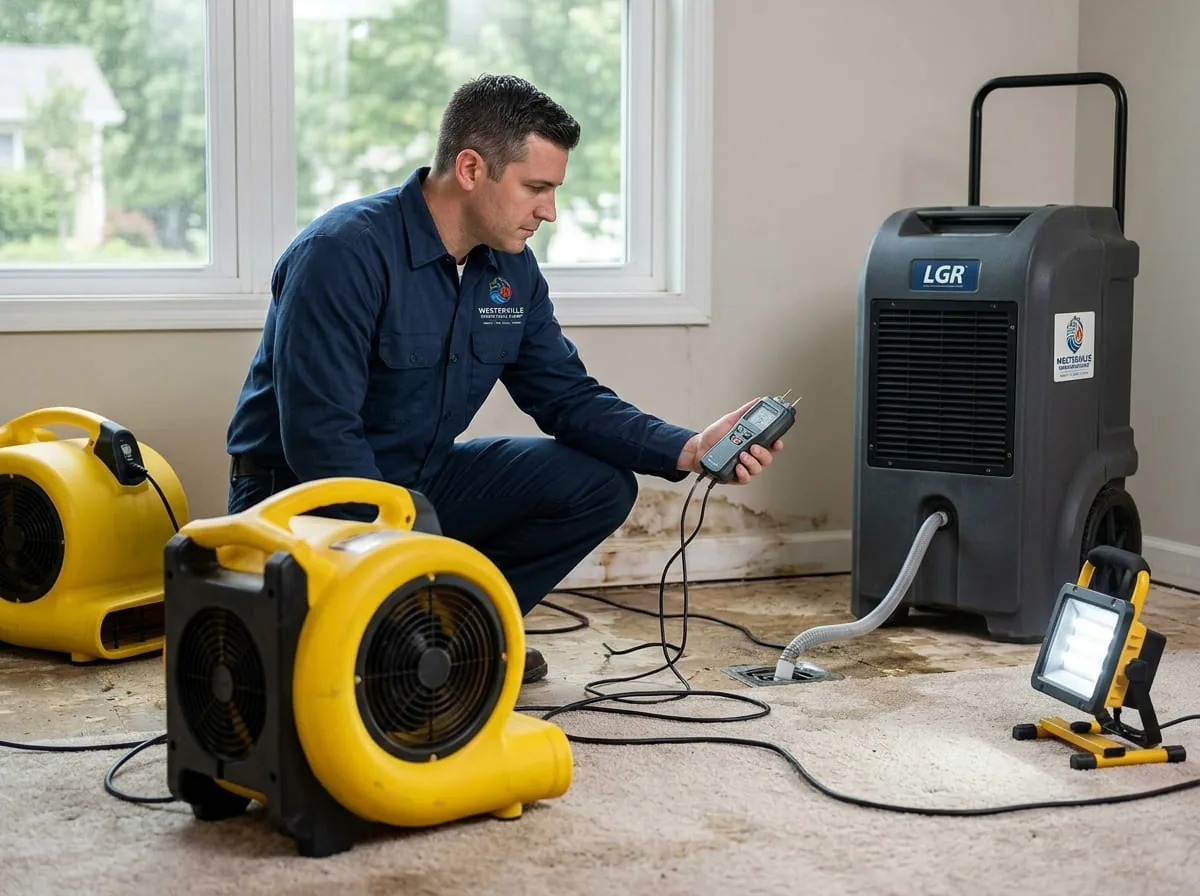
After extraction, a room can look dry while the materials inside its walls and floor are still holding significant moisture. Structural drying addresses that gap, using air movement and dehumidification to pull moisture out of framing, subfloor, drywall, and insulation over the days following a water loss, rather than assuming the job is done once standing water is gone.
This step carries extra weight in Central Ohio's humid summers, when ambient humidity works against natural drying and materials that would air-dry in a drier climate can stay damp long enough to support mold growth instead.
How Structural Drying Works
Air movers get positioned to create consistent airflow across wet surfaces, speeding up evaporation from carpet, walls, and flooring. Commercial dehumidifiers then pull that moisture out of the air before it can resettle on other surfaces or raise humidity throughout the rest of the structure, which is especially important in a finished basement where airflow is naturally more limited.
- Air movers placed to target wet walls, flooring, and framing
- Commercial-grade dehumidifiers sized to the affected square footage
- Moisture meters used daily to track drying progress
- Removal of baseboards or drywall sections where needed to dry wall cavities
- Documentation of moisture readings for insurance purposes
Why Drying Time Varies by Property
How long structural drying takes depends on the materials involved, how much water was absorbed, and the ambient humidity in the space. A basement with concrete walls and a finished drywall interior dries differently than a main-floor room with hardwood flooring, and older homes near Uptown Westerville with original plaster walls can behave differently than newer drywall construction in Orange Township or New Albany.
Drying isn't considered complete just because a space feels dry to the touch; moisture readings inside walls and subfloor need to return to a normal baseline before equipment comes out and repairs begin.
Skipping This Step Is a Common Mistake
It's tempting to assume that once water is extracted and a room looks normal, the work is finished. In Central Ohio's humid summer months especially, materials that seem dry can still be holding enough moisture to support mold growth within roughly 24 to 48 hours. Structural drying with proper monitoring is what actually closes that window.
Frequently Asked Questions
How long does structural drying typically take?
Many residential losses dry within three to five days with equipment running continuously, though larger losses, basements, or particularly humid conditions can extend that timeline. Daily moisture checks determine when drying is actually complete rather than relying on a fixed schedule.
Do I need to leave the house while drying equipment runs?
Most homeowners are able to stay in the home, though air movers and dehumidifiers do add some noise. Anyone with respiratory sensitivities may prefer to limit time in the affected area until drying is complete, and it's worth asking the crew on-site about your specific situation.
Can drywall and insulation be dried instead of replaced?
In many cases involving clean water, yes, especially if drying starts quickly. Drywall and insulation exposed to contaminated water, such as a sewage backup, are more often removed and replaced rather than dried, due to the health risk of retained contamination.
Related services
Nearby service areas
Extraction Finished, but Is the Structure Actually Dry?
A moisture check can confirm whether drying equipment is still needed before mold has a chance to take hold.
Request Water Damage Service