
Mold Prevention & Moisture Control After Water Damage in Westerville, OH
Central Ohio's humid summers turn damp materials into a mold risk in as little as 24 to 48 hours, which makes moisture control a race against the clock after any water loss.
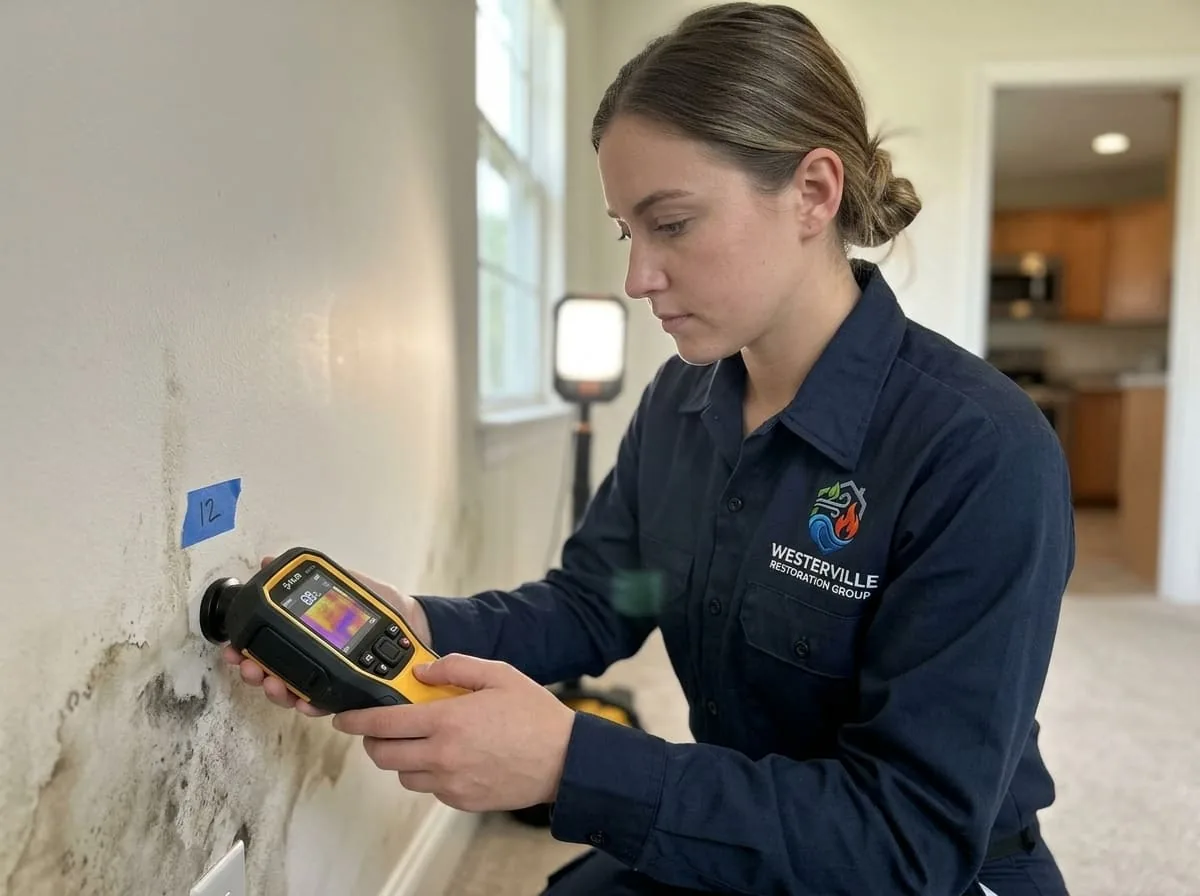
Extracting water and running drying equipment addresses the immediate flooding, but mold prevention is about what happens in the days and weeks after, making sure moisture levels actually return to normal rather than lingering in wall cavities, subfloor, or a finished basement. In a climate like Westerville's, with warm and humid summers layered on top of a genuinely basement-heavy housing stock, this step carries real weight.
This page covers the moisture control measures used after a water loss to reduce mold risk, and how this connects to the more detailed mold remediation services covered separately in the mold silo.
Why Mold Risk Rises So Quickly Here
Mold spores are present essentially everywhere, and they need only moisture, a food source like drywall paper or wood, and time to establish themselves. Warm, humid summer conditions in Central Ohio accelerate that timeline, which is why damp materials left standing can become a genuine mold concern within roughly 24 to 48 hours rather than the week or more it might take in a drier climate.
- Damp drywall and framing left without airflow or dehumidification
- Finished basements, where humidity is naturally higher and ventilation is more limited
- Carpet padding that retains moisture even after the carpet feels dry
- Areas behind baseboards or inside wall cavities that don't dry as visibly as open surfaces
- Homes closed up during travel with no HVAC or dehumidification running
Moisture Control Measures Used After a Water Loss
Beyond standard structural drying, moisture control includes verifying that hidden areas, wall cavities, under-flooring, and basement corners, actually reach a safe moisture level rather than just appearing dry on the surface. Antimicrobial treatments are sometimes applied to framing and subfloor as a preventive measure in areas that were saturated, and continued humidity monitoring for a period after equipment comes out helps confirm the space is holding steady rather than creeping back up.
When Prevention Isn't Enough
If more than 24 to 48 hours passed before water was addressed, or if a finished basement stayed damp longer than expected, visible mold growth is a real possibility rather than a worst-case scenario. In that situation, mold prevention shifts into mold remediation, which is handled as its own dedicated service.
Frequently Asked Questions
How soon after a water loss should I be worried about mold?
In Central Ohio's humid summer conditions, materials that stay wet for roughly 24 to 48 hours are already in the window where mold can begin to establish. Faster extraction and drying directly reduce that risk, which is why addressing a water loss promptly matters even when the visible damage seems minor.
Can I just run a dehumidifier myself instead of calling for help?
A household dehumidifier can help with general humidity in a room, but it's generally not equivalent to commercial drying equipment for an active water loss, especially moisture trapped inside walls, subfloor, or a finished basement. For anything beyond a very minor, quickly addressed spill, professional moisture mapping gives a more reliable picture.
What's the difference between mold prevention and mold remediation?
Prevention focuses on drying a structure thoroughly enough after a water loss that mold never gets the chance to establish. Remediation addresses mold that has already started growing, which requires a different process involving containment and removal, covered separately on the mold-specific pages of this site.
Water Damage Handled, but Is the Moisture Really Gone?
A moisture check in the days after a loss can catch a mold risk before it becomes visible growth.
Request Water Damage Service