Burst Pipe Cleanup: What to Do Before Crews Arrive
Why pipes burst in a Central Ohio winter, and the right order of steps once one does.
Last updated 2026-09
A burst pipe is one of the more common cold-weather emergencies in this part of Ohio. Central Ohio's winters bring hard freezes and repeated freeze-thaw cycles, and water expands as it freezes inside a pipe - enough to split copper, PEX, or galvanized lines that are exposed or poorly insulated. The break itself often isn't discovered until the ice plug thaws and pressurized water starts flowing through the crack, which is why a burst pipe is often found well after the coldest night that actually caused it.
1. Shut off the main water valve
This is the single most important step, and it matters more than trying to stop the leak at its exact location. The main shutoff is typically near where the water line enters the home - in a basement, a utility area, or near the water meter. Turning it fully clockwise stops the flow throughout the house, not just at the break.
2. Cut power to any affected area
If water from the burst pipe is anywhere near outlets, light fixtures, or an electrical panel, shut off power to that area at the breaker box before doing anything else in the space. If the panel itself is wet or hard to reach safely, don't attempt it - wait for a licensed electrician or restoration professional to confirm it's safe.
3. Relieve remaining pressure in the lines
After the main valve is off, open a few faucets (starting with the lowest point in the house) to drain remaining water out of the pipes and relieve pressure. This reduces the amount of water still working its way out of the break and can slightly limit further spread.
4. Contain and remove what water you safely can
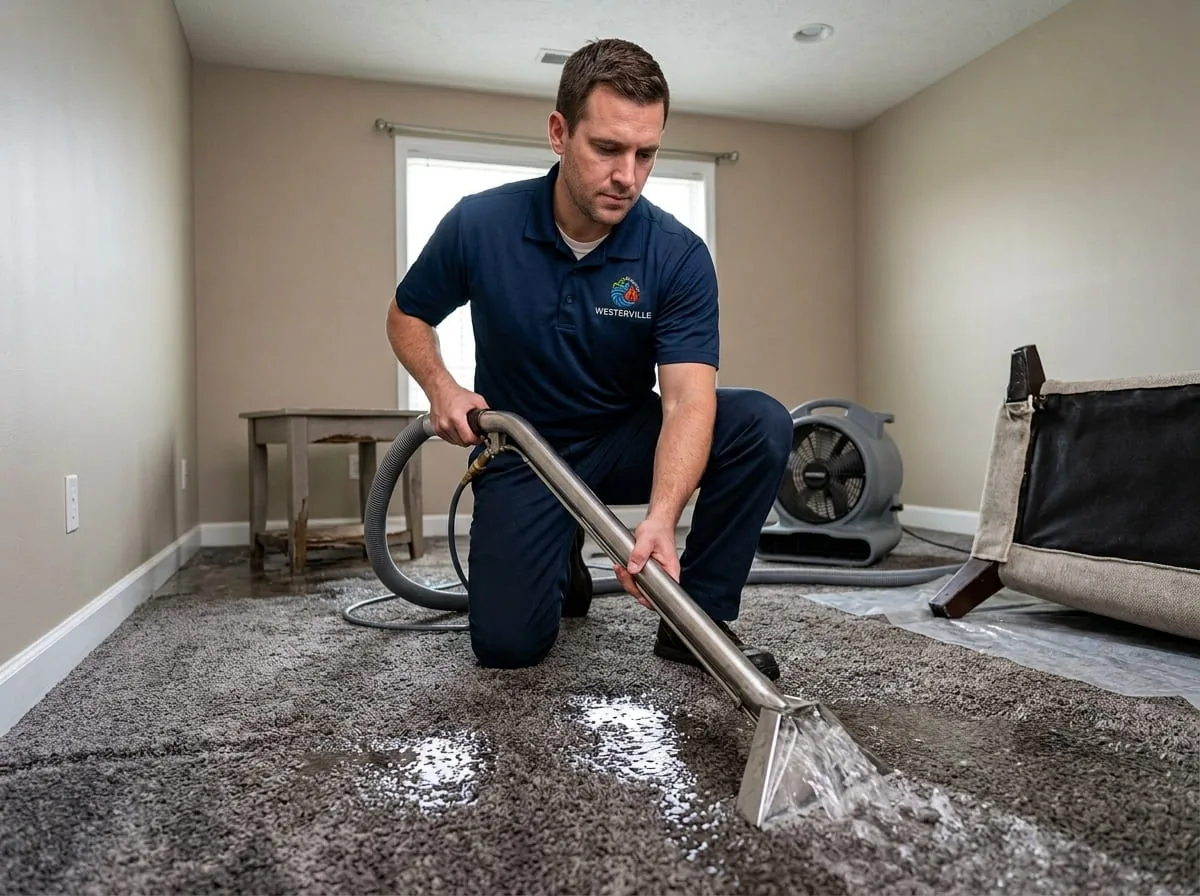
Towels, buckets, and a wet/dry shop vacuum can handle standing water in an area with no electrical hazard. Move furniture, rugs, and boxes away from the wet area, and lift anything you can off the floor. Photograph the pipe, the water source, and the affected rooms before cleanup begins - that documentation matters for the insurance side of things.
Why this happens so often in this region
Pipes running through unheated spaces - a basement rim joist, an exterior wall, a crawl space, or an uninsulated attic - are the most common failure points during a hard freeze. Older homes in Westerville's established neighborhoods sometimes still carry original or aging supply lines that are more vulnerable than newer copper or PEX, but even newer construction isn't immune if a section of pipe runs through an uninsulated space. Keeping cabinet doors open under sinks on exterior walls during a hard freeze, and having exposed pipes insulated ahead of winter, are the most effective ways to reduce the odds of this happening in the first place.
Frequently Asked Questions
Why do pipes burst in winter here more than other times of year?
Water expands as it freezes, and that expansion can split a pipe from the inside. Central Ohio's repeated freeze-thaw cycles mean pipes in unheated or poorly insulated spaces go through this stress repeatedly over a winter, which is why bursts often show up during or right after a hard cold snap.
What if I can't find the main water shutoff valve?
Check near the water meter, in a basement or crawl space where the main line enters, or near a utility sink or water heater. If it truly can't be located quickly, shutting off the valve at the specific fixture or appliance nearest the break is a reasonable interim step while help is on the way.
Can I patch the pipe myself to stop the leak temporarily?
A pipe repair clamp or rubber-and-hose-clamp patch can sometimes slow a leak temporarily once the water is shut off and the pipe is drained, but it's not a fix - it's a stopgap. The permanent repair and any related water damage cleanup should go to a licensed plumber and restoration professional.
Related services
Dealing With a Burst Pipe Right Now?
The professionals we work with are equipped for 24/7 emergency response, including the depths of a Central Ohio winter.
Need Help Now? Call (614) 665-8102