
Ceiling & Wall Water Damage in Westerville, OH
A brown ring spreading across a ceiling in a Westerville home usually means water has been traveling somewhere out of sight for longer than it looks.
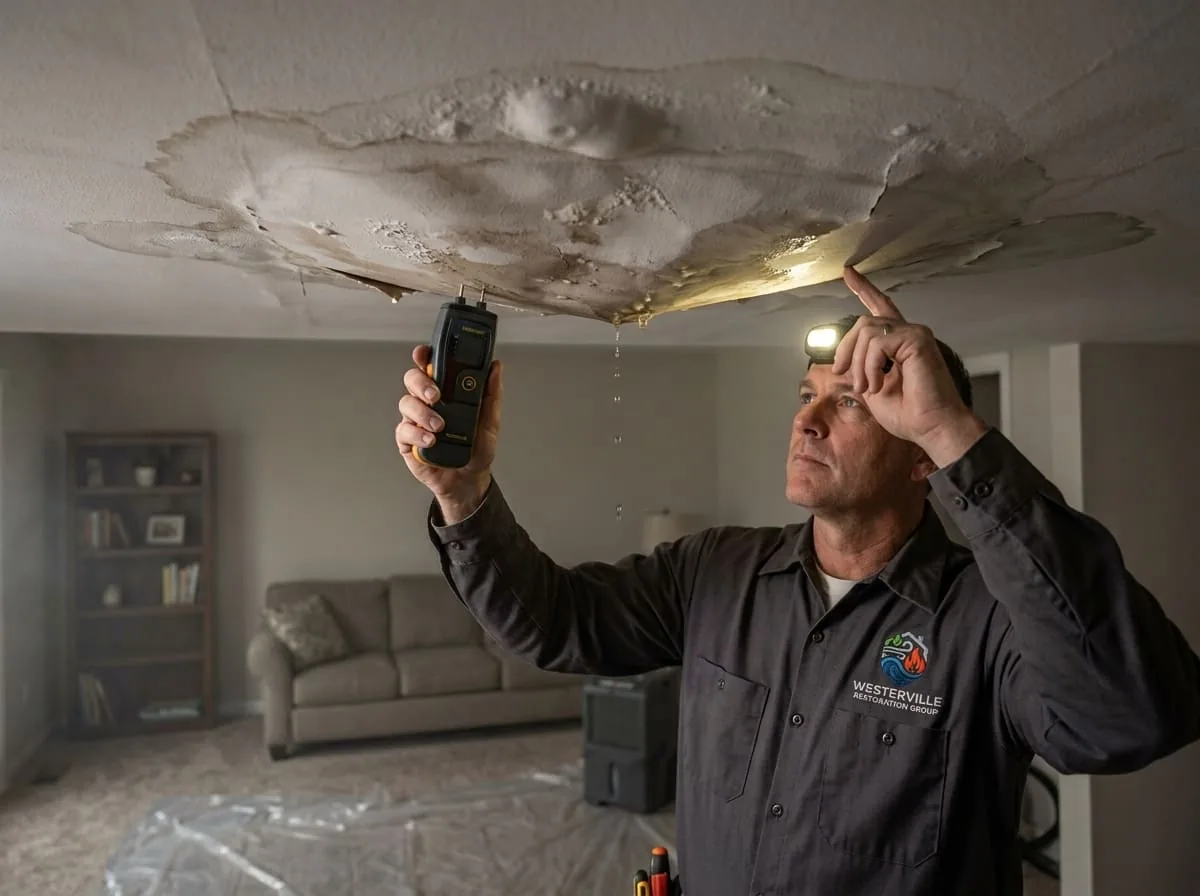
A water stain on a ceiling or wall is almost never the actual source of the problem, it's just where the water finally became visible. By the time discoloration, bubbling paint, or a soft spot in drywall shows up, water has typically already traveled through insulation, framing, or the back side of the wall cavity.
This page covers how restoration professionals dispatched to Westerville-area homes and buildings assess and address ceiling and wall water damage, whatever the upstream cause turns out to be.
What Causes Ceiling and Wall Water Damage
The source is usually somewhere above or behind the visible damage, which is part of why a proper assessment matters more than just patching the stain.
- A slow leak from plumbing running through an upper floor or attic
- Roof leaks allowing water to travel down through framing
- A burst pipe inside a wall cavity
- Condensation buildup around poorly insulated pipes
- Water intrusion around window or door flashing during heavy rain
Why the Visible Stain Isn't the Whole Story
Moisture meters and, in some cases, thermal imaging are used to trace how far water has actually traveled beyond the stained area, since drywall, insulation, and framing can all be affected well past the visible boundary. Cutting into the ceiling or wall is sometimes necessary just to confirm the extent of the damage and locate the actual source, particularly when the leak is intermittent rather than constant.
Once the source is identified and addressed, whether that means a plumbing repair, roof repair, or resolving a condensation issue, drying equipment gets positioned to bring the affected framing and remaining drywall back to a safe moisture level.
When Ceiling Damage Signals a Bigger Problem
A ceiling stain that keeps reappearing after being painted over usually means the underlying source was never actually fixed. In multi-story homes, common across both older Uptown Westerville properties and newer two-story construction in Genoa and Orange Townships, a slow leak on an upper floor can affect ceilings one or even two levels down before anyone connects the dots.
Frequently Asked Questions
Is it safe to keep living in a room with a ceiling water stain?
A stable, dry stain that isn't actively growing is generally not an immediate hazard, though it should still be assessed and addressed. If the ceiling feels soft, is sagging, or the stain is actively spreading or dripping, avoid standing directly underneath it and treat it as an active issue needing prompt attention, since a wet ceiling can eventually fail structurally.
Can a water-stained ceiling just be painted over?
Painting over a stain without addressing the source and confirming the area is fully dry usually just hides the problem temporarily. If moisture is still present, the stain will likely return, and painting over an active leak can also trap moisture against materials that need to dry out.
How do restoration crews find a hidden leak behind a wall?
Moisture meters can identify damp areas without cutting into the wall, and thermal imaging cameras can sometimes reveal temperature differences that point to moisture location. In some cases, a small inspection opening is still the most reliable way to confirm exactly where water is coming from.
Related services
Nearby service areas
Noticed a Stain That Keeps Coming Back?
A proper leak assessment can find the actual source before more of the ceiling or wall is affected.
Request Water Damage Service