Commercial Fire Damage Restoration
A fire at a business means lost revenue every day the doors stay closed. Get connected with commercial restoration crews built for that pressure.
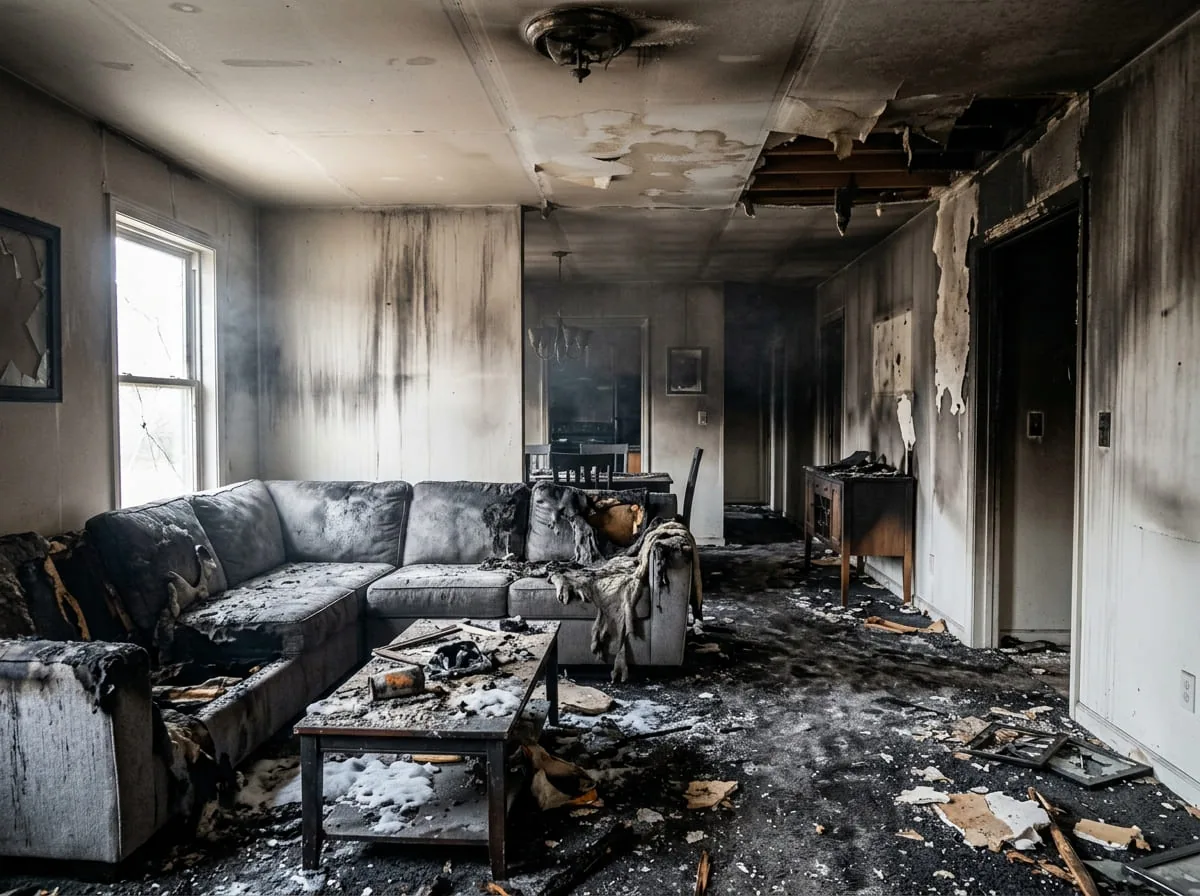
A fire loss at a business carries pressures a residential loss doesn't: inventory that has to be assessed and possibly salvaged, equipment and records that may be time-sensitive, employees who need somewhere to work, and a reopening date that affects revenue every day it slips.
Calls from offices, retail spaces and other commercial properties around Uptown Westerville, State Street and the broader Franklin and Delaware County area are routed to restoration professionals with the crew size and equipment to handle a commercial-scale loss without treating it like an oversized house fire.
What Commercial Fire Restoration Typically Involves
Beyond the structural fire cleanup itself, commercial losses often require inventory assessment, document and electronics recovery, coordination with multiple stakeholders (owners, insurers, sometimes tenants), and a mitigation plan built around reopening as quickly as it's safely possible.
- Large-scale water extraction and structural drying equipment sized for commercial square footage
- Inventory and equipment assessment for what can be cleaned versus what's a total loss
- Document and electronics recovery, often requiring specialized handling
- Direct coordination with property insurance for commercial claims documentation
Minimizing Downtime Without Cutting Corners
Every day a business stays closed after a fire has a real cost, which puts pressure on restoration timelines that residential losses don't face in the same way. That pressure has to be balanced against doing the work correctly — rushing structural drying or soot removal to reopen early can leave hidden moisture or residue that causes problems later.
A single point of contact routing the full sequence — securing the building, extracting water, removing soot and odor, and rebuilding — helps keep a commercial reopening on the fastest realistic timeline rather than one delayed by disconnected vendors.
Frequently Asked Questions
Can a business stay partially open during fire restoration?
Sometimes, depending on how contained the damage is and whether affected areas can be sealed off from operational space. A professional assessment of the specific building and loss is needed to determine what's realistic and safe.
What happens to inventory and equipment affected by smoke?
Smoke-affected inventory and equipment are typically assessed item by item — some can be professionally cleaned and salvaged, while heavily contaminated or damaged items may need to be written off. Documentation of this process also supports insurance claims.
How is a commercial fire loss different from a residential one?
Scale, complexity and financial pressure are the main differences. Commercial losses often involve larger square footage, more stakeholders, inventory and equipment concerns, and a direct revenue impact for every day the business can't operate.
Who typically handles communication with our insurance adjuster?
Restoration professionals commonly work alongside a business's insurance adjuster, providing documentation such as moisture readings, photos and scope of work, though the business owner or manager generally remains the primary point of contact for claim decisions.
Related services
Nearby service areas
Get Your Business Back Open, Done Right
Commercial fire losses need crews and equipment sized for the job, not a residential-scale response stretched thin.
Request Fire Damage Service