
Commercial Mold Remediation
Mold in a Westerville-area office, retail space, or multi-tenant building needs to be scoped and scheduled differently than a single-family home — get matched with specialists who work around your operation.
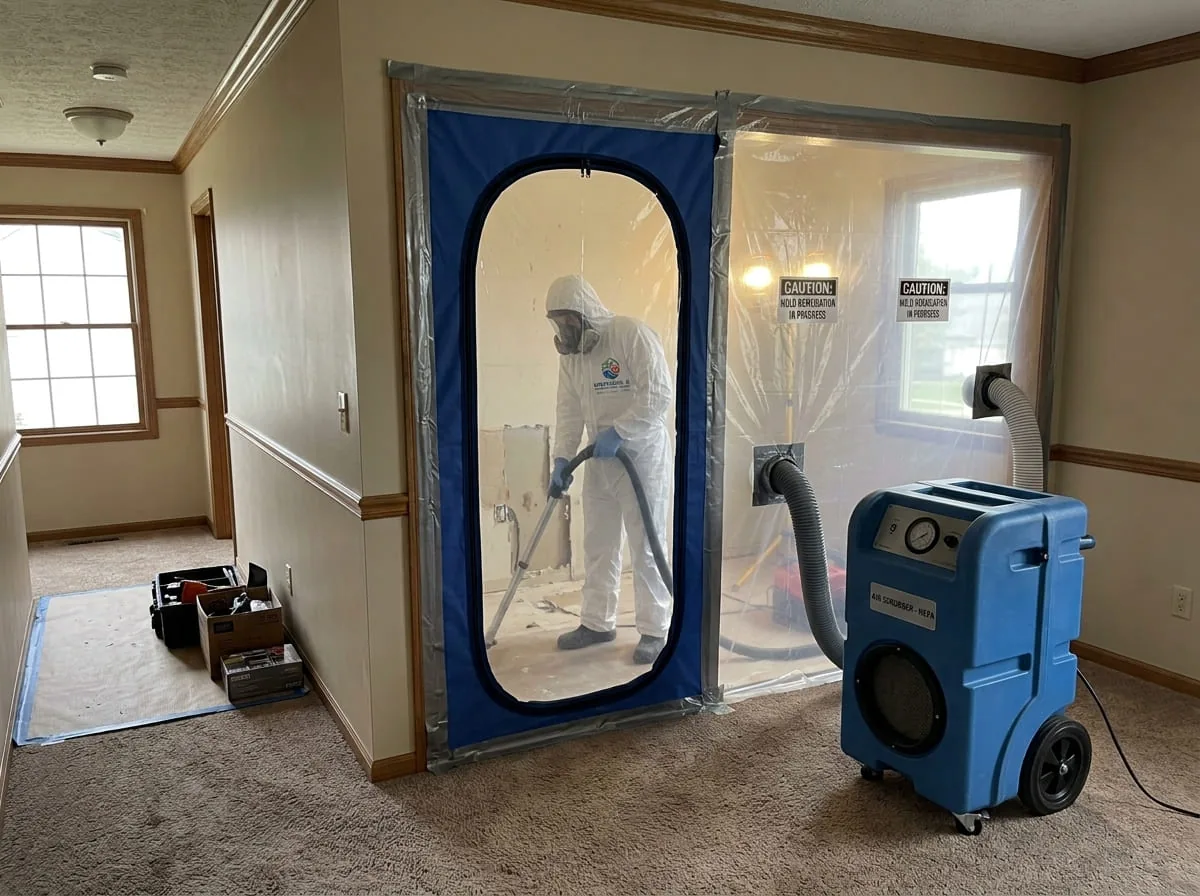
Commercial mold problems come with a different set of pressures than a residential job: more square footage to assess, shared HVAC systems that can spread spores between units or floors, tenants or customers who need advance notice, and documentation requirements tied to insurance, leases, or liability. Businesses across Westerville, Worthington, and the surrounding Franklin and Delaware County suburbs get connected here with commercial remediation specialists who are used to working within an operating building rather than an empty one.
Whether the source is a roof leak over a retail space, condensation in a rooftop HVAC unit, or a damp lower level in an older Uptown Westerville storefront, the approach starts with understanding how the building is used before any containment work begins.
Why Commercial Mold Problems Need a Different Approach
A shared HVAC system is one of the biggest differences between a commercial job and a residential one — ductwork that serves multiple units or floors can carry mold spores well beyond the room where the moisture problem started, which changes how containment is planned. Multiple tenants, employees, or customers moving through the space also raise the stakes on documentation and communication in a way a single-family home doesn't.
Commercial Properties Prone to Mold in This Market
A few property types come up more than others in the Westerville area.
- Older storefronts and mixed-use buildings near Uptown Westerville with aging mechanical systems
- Office parks and newer commercial construction with rooftop HVAC condensation issues
- Restaurants and food-service spaces with higher ambient humidity
- Multi-tenant and property-management portfolios where one unit's moisture problem can affect neighbors
- Basements and lower levels of commercial buildings, similar to the basement-heavy residential stock in this market
How Commercial Remediation Is Typically Scheduled and Scoped
An inspection first establishes how far the problem extends — often across more than one unit or floor in a shared building — before any containment plan is set. Isolating the affected zone with negative air and physical barriers usually allows the rest of the building to keep operating, and scheduling is generally coordinated around business hours, tenant leases, or off-hours access rather than forcing a full shutdown by default.
Documentation tends to matter more on the commercial side, both for insurance claims and for satisfying property-management or lease obligations, so a clearance or verification step at the end of the job is common on larger commercial scopes.
Frequently Asked Questions
Can commercial mold remediation happen without closing the business?
In many cases, yes — containment and phased scheduling are used specifically to keep the rest of a building operating while one section is addressed. Whether it's fully possible depends on where the affected area sits relative to shared systems like ductwork, so this gets worked out during the inspection rather than assumed upfront.
Who's responsible for mold remediation in a leased commercial space — the landlord or the tenant?
That generally comes down to the specific lease terms and what caused the moisture problem, so it's worth reviewing the lease and talking with the property owner or manager alongside the responding restoration professional. This isn't something that can be answered the same way for every building.
Does commercial property insurance cover mold damage?
It depends on the policy and the cause of the moisture, similar to residential coverage. Documenting the damage and the timeline, then discussing it with the insurer or adjuster, is the more reliable path than assuming coverage either way.
How is mold in a commercial HVAC system handled?
HVAC contamination needs specialized handling because of how easily a shared system can spread spores through a building — this isn't something to address with a simple filter change. A professional assessment of the ductwork and air handling equipment is the right starting point rather than DIY cleaning.
Mold Affecting a Westerville-Area Business?
Get connected with a commercial remediation specialist who can scope the job around your tenants or operating hours.
Speak With a Restoration Team