
Firefighting Water Damage Cleanup
Putting out a fire almost always means adding water damage on top of it. Get connected with crews who handle the extraction and drying before it turns into mold.
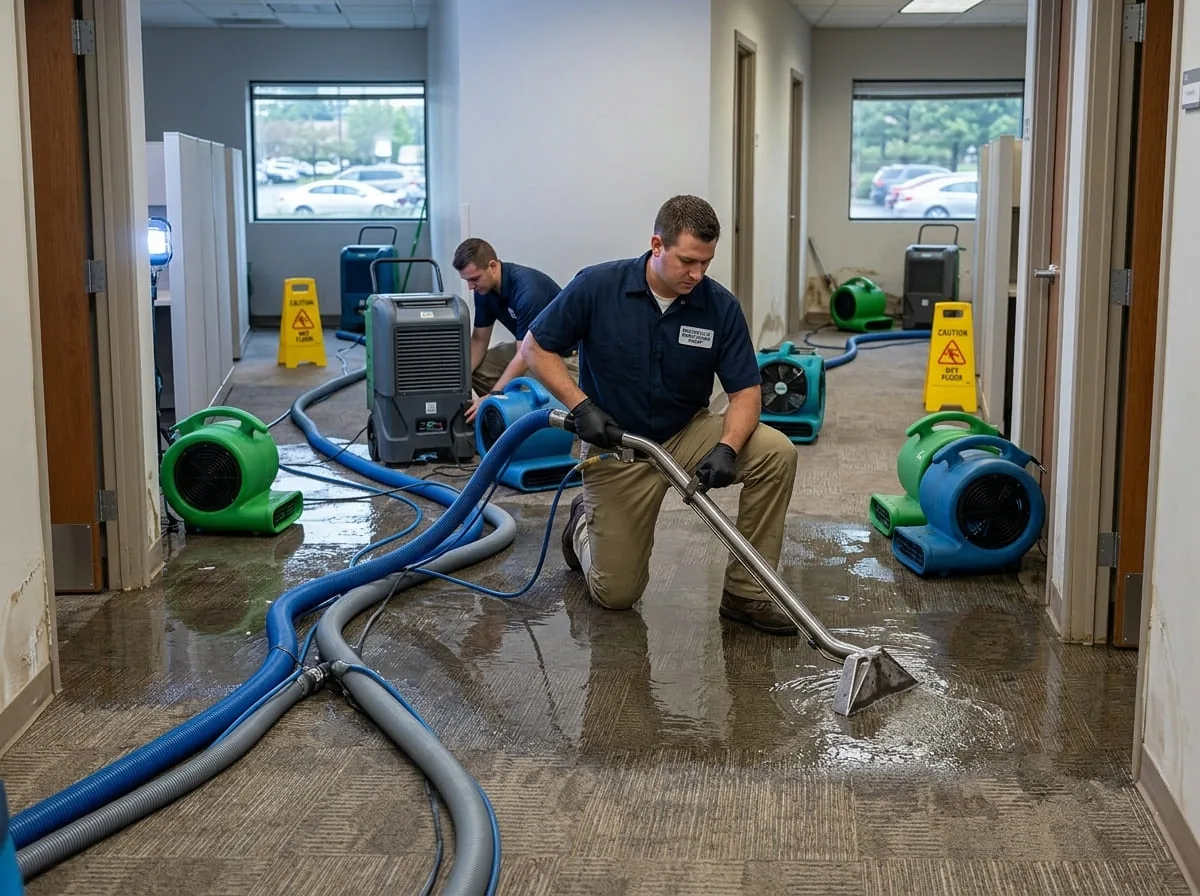
It surprises a lot of homeowners, but the water used to extinguish a fire is frequently the larger part of the loss. Hose streams, sprinkler discharge and burst plumbing routinely leave far more standing water behind than the fire itself would ever have caused, and that water doesn't stay where it first lands.
This page connects Westerville, Gahanna, Worthington and nearby Franklin and Delaware County property owners with restoration professionals who treat firefighting water damage as its own urgent job — not an afterthought to the fire cleanup.
Where Firefighting Water Actually Ends Up
Water applied on an upper floor travels downward through ceilings, wall cavities and stairwells before collecting at the lowest point of the structure — which, in the basement-standard housing stock common across Westerville and Franklin and Delaware County, usually means the basement.
That makes firefighting water damage a genuinely two-part problem: the visible saturation near the fire, and the hidden pooling in a basement or crawl space that can go unnoticed until it's already caused secondary damage or odor.
- Ceiling and wall cavities soaked from hose streams on floors above
- Basements collecting runoff from firefighting efforts on every floor
- Subfloors and framing left damp long after visible puddles are gone
- Sprinkler system discharge, which can add volume on top of hose water in commercial or multi-family buildings
Why This Water Needs to Come Out Fast
Left standing in Central Ohio's humid summer air, water trapped behind walls or in a basement can become a mold concern within 24 to 48 hours — a timeline that doesn't pause just because a fire was the original cause. Structural drying equipment and moisture monitoring are used to track hidden dampness that a visual check alone would miss.
For more on what to expect once the fire department has left, see Water Damage After Firefighting and Hidden Moisture After a House Fire in the resource center, and Basement Water Damage / Flooded Basement Cleanup if standing water has reached a finished or unfinished basement.
Frequently Asked Questions
Why is there so much more water damage than fire damage in my house?
This is common. Firefighting requires a large volume of water applied quickly, and that water spreads through ceilings, walls and floors far beyond the immediate area of the fire, often reaching a basement even when the fire itself was contained to one room.
How do I know if water has reached areas I can't see?
Visible dampness is only part of the picture — moisture can sit inside wall cavities, under flooring and in basement corners without an obvious sign. Professionals use moisture meters and thermal imaging to check for hidden dampness that a visual inspection alone would miss.
Can firefighting water damage lead to mold even if the fire was small?
Yes. Mold risk is driven by how much moisture is trapped and for how long, not by the size of the fire. A small fire that leaves water sitting in a basement or wall cavity for a few days in humid weather can create the same mold conditions as a larger loss.
Don't Let Firefighting Water Sit
The water that put the fire out needs to come back out fast, especially from basements and wall cavities.
Get Emergency Water Removal