
Flood Damage Cleanup in Westerville, OH
Flooding around Westerville tends to start below grade, in basements along the Big Walnut Creek corridor and in sump pits overwhelmed by heavy regional rainfall.
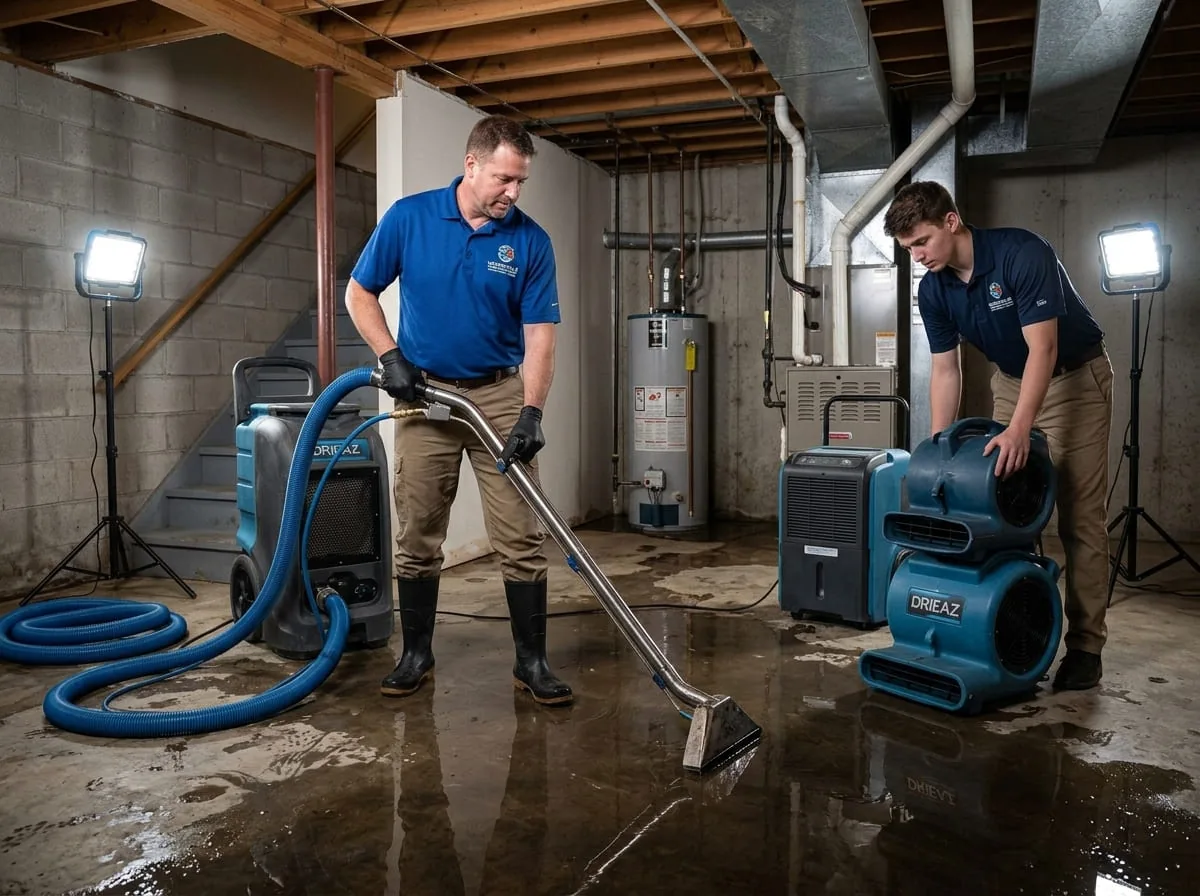
Flood damage in this part of Franklin and Delaware County rarely looks like the news footage of a river cresting its banks. More often, it's a finished basement taking on water because a sump pump couldn't keep up with hours of heavy rain, or a property near Big Walnut Creek dealing with saturated ground and rising water after a wet stretch tied to conditions upstream at Hoover Reservoir.
Cleanup after flooding involves more than pumping out water. Floodwater can carry sediment, lawn chemicals, or in some cases sewage, which changes how a restoration crew approaches extraction, cleaning, and what materials can safely be dried versus what needs to be removed.
Common Sources of Flooding in the Westerville Area
Most flood calls in this market trace back to one of a few recurring causes, and knowing which one applies affects how the cleanup is handled.
- Sump pump failure during a sustained heavy-rain event
- Heavy regional rainfall overwhelming storm drainage and yard grading
- Rising water near Big Walnut Creek during periods of high flow
- Window-well leaks letting rainwater into a basement
- Storm-driven roof or gutter failure sending water into upper floors
How Flood Cleanup Differs From a Standard Water Loss
Floodwater is often treated more cautiously than a clean supply-line break, since it may have picked up contaminants on its way into the structure. Restoration crews assess the water category before deciding whether carpet, pad, and certain drywall can be dried in place or need to be removed and replaced.
Once the source is contained and standing water is extracted, cleanup typically shifts to disinfecting affected surfaces, drying the structure with air movers and dehumidifiers, and monitoring moisture levels over the following days to confirm the space is actually dry, not just dry to the touch.
Sump Pump Failure Deserves Special Attention
Because basements are the standard foundation type across Westerville and its surrounding suburbs, sump pump failure is one of the single most common causes of flood damage calls in this market, particularly during storms that also knock out power. A battery backup or generator can reduce that risk, but once flooding has already happened, the cleanup priorities are the same regardless of what caused the pump to fail.
Frequently Asked Questions
Is basement flooding from heavy rain covered by insurance?
It depends on the policy and the specific cause. Sump pump failure and water backup are sometimes covered under separate endorsements rather than a standard homeowners policy, and true flood damage from rising surface water often requires flood insurance rather than a standard policy. A restoration crew can document the loss thoroughly, but coverage questions are best confirmed directly with the insurer.
Is it safe to walk through floodwater in my basement?
Avoid it if there's any chance of contact with electrical outlets, a water heater, or an electrical panel, and don't enter the basement at all if you're unsure whether power to the area has been shut off. If the water may contain sewage, keep children and pets away and let a professional handle direct contact and cleanup.
What can be salvaged after flood damage?
It depends heavily on how contaminated the water was and how long materials sat wet. Hard flooring, framing, and some drywall can often be cleaned and dried, while carpet, pad, and certain insulation exposed to contaminated water typically need to be removed rather than dried in place.
Flooded Basement or Storm-Driven Water Intrusion?
A restoration crew can assess the source, extract the water, and start drying before the damage spreads any further.
Request Water Damage Service