Water Damage Restoration in Genoa Township, OH
Genoa Township borders Westerville directly to the north and mixes established neighborhoods with newer golf-course-community subdivisions, both built on Central Ohio's basement-standard foundation.
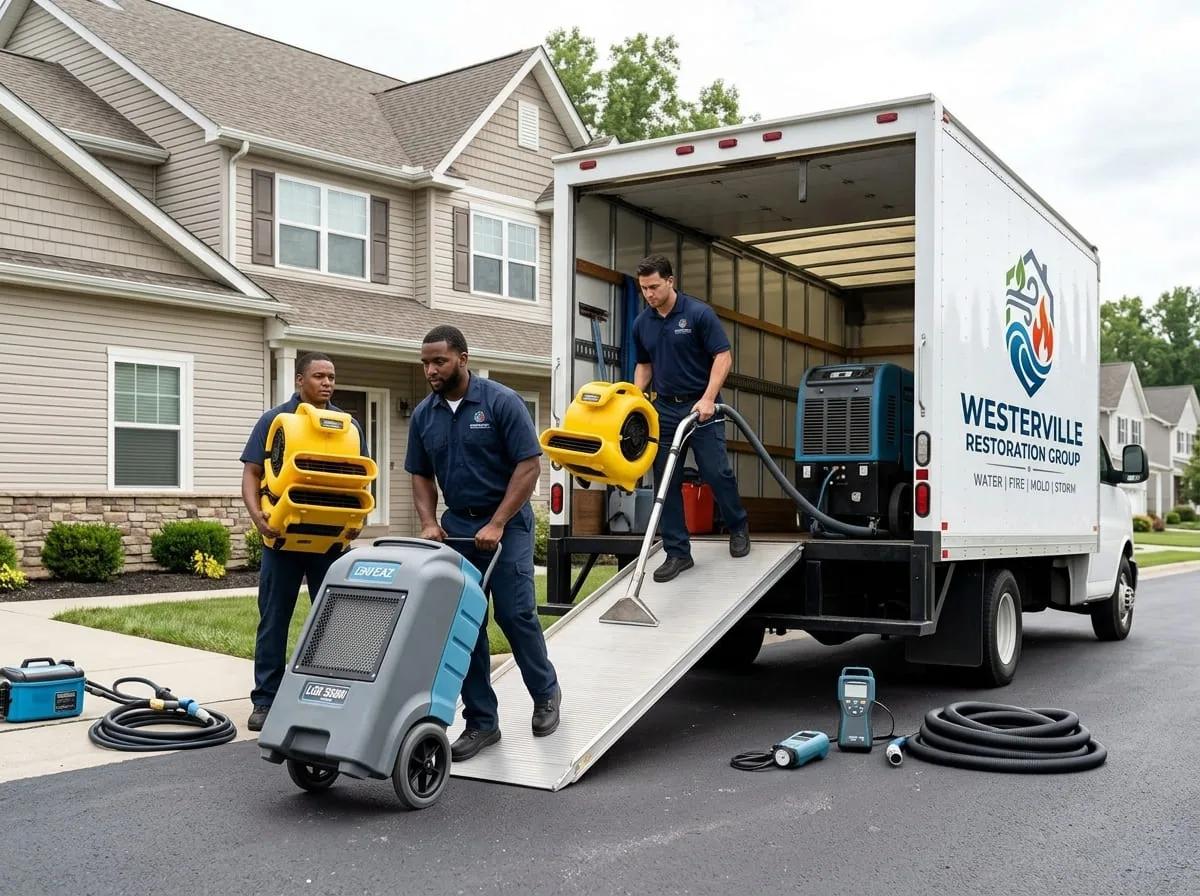
Because Genoa Township borders Westerville directly and has been partly annexed over time, its housing stock spans a wider range of ages than a township built out in a single wave of development. Older sections carry the same aging-supply-line considerations found in established Central Ohio neighborhoods, while the newer golf-course subdivisions were built more recently with different plumbing materials.
Basements are standard across both the established and newer sections of Genoa Township, in keeping with the rest of Central Ohio's clay-soil and frost-line building requirements. Golf-course-community subdivisions frequently include finished lower levels used as additional living space, which raises the stakes when a sump pump or foundation seepage problem goes unnoticed.
Because Genoa Township directly borders Westerville, and part of the township has been annexed into the city over time, restoration dispatch for the area is based on the property's actual address rather than an assumption about which side of a boundary line it falls on. That matters practically for a homeowner near the edge of the township who isn't entirely sure which jurisdiction their street falls under.
Central Ohio's climate applies fully to Genoa Township regardless of which section of the township a property sits in: hard winter freeze-thaw cycling stresses older supply lines and foundation walls, while humid summer conditions raise the mold stakes on any water intrusion that isn't dried out quickly.
Genoa Township's mix of established neighborhoods and newer golf-course subdivisions also means restoration professionals responding here need to gauge, property by property, whether they're dealing with an older sump system that may be nearing the end of its service life or a newer one that simply wasn't tested before it failed.
None of this changes the basic response sequence for a Genoa Township water loss: stop the source where possible, extract standing water, then dry and monitor the structure until moisture readings confirm it's actually dry rather than simply dry to the touch, regardless of whether the property sits in an established neighborhood or a newer subdivision.
Water Damage Restoration in Genoa Township
Sump pump failure and foundation seepage are the leading basement water damage causes restoration professionals see in Genoa Township, consistent with the basement-dominant construction found throughout this part of Delaware County.
In the township's newer golf-course-community subdivisions, finished basements used as living or entertainment space mean a water event can affect flooring, drywall and furnishings beyond what an unfinished basement would lose, which often calls for more extensive drying and content handling.
In the township's older, established sections, aging supply lines add winter freeze-thaw failure risk on top of the basement moisture risk shared across the whole township, meaning both burst pipes and sump pump failure show up as regular calls depending on the section of the township and the season.
Power outages during severe thunderstorms affect Genoa Township's electric sump systems the same way they do anywhere else in the region, and a basement that stayed dry through the storm itself can still flood afterward if the pump loses power for even a few hours while groundwater keeps rising.
Restoration professionals responding to a Genoa Township basement flood typically prioritize extraction first, then structural drying and dehumidification, with the drying timeline shaped by how much of the space was finished and how quickly the water was addressed.
Appliance and water heater failures round out the most common water damage causes in Genoa Township, affecting established and newer homes alike regardless of which side of the annexation line a given property happens to sit on.
Storm and rain water damage is a related but separate consideration from plumbing failures, particularly for properties where grading or drainage around the home hasn't kept pace with how the surrounding subdivision has developed over time.
Fire Damage Restoration in Genoa Township
Fire damage response in Genoa Township has to account for the mix of older framing methods in established homes and more modern construction in newer subdivisions, since smoke and heat travel differently depending on a structure's age and layout.
As with any fire loss, firefighting water left behind after the fire is out typically needs the same structural drying attention as the smoke and soot damage itself.
In finished basements common to the township's newer subdivisions, firefighting runoff from upper floors can add a second water problem in a space that already had drywall, flooring and furnishings at risk before the fire itself was even considered.
Board-up and tarping help protect a Genoa Township property from further weather exposure immediately after a fire, buying time for a full repair plan to come together.
Mold Remediation in Genoa Township
Finished basements in Genoa Township's newer subdivisions carry real mold risk after any undetected leak, since moisture can sit behind drywall or under flooring out of sight for longer than it would in an unfinished space.
In older sections of the township, mold following a water event is more often tied to long-standing seepage or a slow plumbing leak that went unnoticed for a period before it was found.
Central Ohio's humid summer conditions mean the 24-to-48-hour window between standing moisture and a real mold concern applies across Genoa Township regardless of a home's age or which section of the township it sits in.
A thorough mold inspection after a Genoa Township water event typically covers both the room where the damage occurred and adjoining spaces, since moisture and airflow don't respect room boundaries any more than they respect a township line.
Annexation, Older Neighborhoods and Newer Subdivisions
Because Genoa Township borders Westerville directly and has been partly annexed over time, its housing stock spans a wider range of ages than a township defined by a single development era would have. Older sections carry the same aging-supply-line considerations found in established Central Ohio neighborhoods, while the newer golf-course subdivisions were built more recently with different plumbing materials.
That split matters for restoration response because the likely cause of a water loss, and sometimes the materials involved in drying it out, can differ meaningfully between an older Genoa Township home and one in a newer subdivision a few streets away.
What to Do Before Restoration Professionals Arrive
If a basement is actively flooding, check whether the sump pump is running and whether the pit itself still has power, but avoid contact with any standing water near an outlet, panel or the pump's own electrical connection if there is any doubt about safety.
Photograph the affected area before moving furniture or belongings, and if the water source is a visible appliance or fixture, shutting off that specific water supply can limit how much worse the loss becomes before a technician arrives.
Finished Lower Levels in Golf-Course-Community Subdivisions
Genoa Township's newer golf-course-community subdivisions frequently build out the basement as usable living space rather than leaving it as unfinished storage, which is consistent with the general trend in newer Central Ohio construction. A finished space raises what's genuinely at risk in a water event, since drywall, flooring, cabinetry and furnishings are all exposed in a way an unfinished basement's bare walls and concrete floor are not.
That finish level also means moisture from a slow, undetected leak can travel further and sit longer behind a wall or under flooring before anyone notices a problem, compared to an unfinished basement where standing water is visible immediately.
Insurance and Documentation After a Water Loss
Sudden, accidental water damage is often covered under a standard homeowners policy, while sump pump failure and sewer backup specifically frequently require a separate endorsement that not every homeowner realizes they're missing until after a loss.
Photographing the affected area before cleanup, noting when the damage was discovered, and keeping repair estimates and receipts all help support a claim, whether the property sits in one of Genoa Township's established neighborhoods or a newer golf-course-community subdivision.
Seasonal Storm Patterns and Genoa Township Basements
Spring and summer bring Central Ohio's heaviest thunderstorm activity, along with the occasional damaging straight-line wind or hail event, and these are the months when a Genoa Township sump system is most likely to be tested by a genuinely large volume of water in a short period.
Winter shifts the risk profile toward burst and frozen pipes rather than sump pump overload, particularly in the township's older sections, though a sump pump can still fail during a winter power outage just as it can during a summer storm.
Genoa Township Water Damage FAQs
Is Genoa Township part of Westerville or a separate community?
Genoa Township is a separate Delaware County township that borders Westerville directly to the north, though portions of the township have been annexed into Westerville over the years, which is why the two names sometimes overlap for residents near the boundary.
Are basements common in Genoa Township's newer subdivisions?
Yes. Basements are the standard foundation type across Central Ohio, including newer golf-course-community subdivisions in Genoa Township, and many of these newer basements are finished as usable living space.
What's the risk with a finished basement versus an unfinished one?
A finished basement has more to lose in a water event, including flooring, drywall and furnishings, and moisture can hide behind those finishes longer before it's noticed, which is part of why fast response matters.
Do older homes in Genoa Township have different water damage risks than newer ones?
Older sections of the township carry more aging-supply-line risk, including winter freeze-thaw pipe failures, while newer sections see more sump pump and appliance-related calls, though basement flooding risk applies across both. A basement can also flood hours after a storm has passed if a power outage knocked out the sump pump while groundwater kept rising, so checking on a system after any outage is worth doing.
What should I check first if I find water in my basement?
If it's safe, check whether the sump pump is running and whether there's still power to it, avoid contact with standing water near electrical outlets or panels, and document the damage with photos before starting cleanup.
Is winter or summer the bigger water damage risk in Genoa Township?
Both carry real risk, just from different causes. Summer thunderstorms are the most likely trigger for sump pump overload and basement flooding, while winter freeze-thaw cycling is the bigger driver of burst and frozen pipes, especially in older sections of the township. Annexation history doesn't change any of this: a property's actual construction era and plumbing, not which jurisdiction it technically sits in, determine its risk profile.
Nearby Service Areas
Get Water Damage Help in Genoa Township
Basement flooding and sump pump failures across Genoa Township's established and newer neighborhoods are routed to a restoration professional ready to respond.
Get Emergency Water Removal