Hidden Moisture After a House Fire
Why a visual inspection alone can't confirm a fire-damaged structure is actually dry.
Last updated 2026-09
Once the visible flooding from firefighting water is extracted, a home can look deceptively dry. But water sprayed under pressure during firefighting doesn't just sit on top of surfaces - it gets driven into wall cavities, under flooring, behind baseboards, and into insulation, where it can stay trapped well after everything visible looks fine. Finding that hidden moisture before reconstruction starts is one of the more important - and more overlooked - steps in fire recovery.
How moisture ends up hidden
Firefighting involves water under pressure, often from multiple angles, working its way into gaps around outlets, baseboards, window and door frames, and through ceiling penetrations. It also travels along framing members inside a wall cavity, spreading further than the point where it entered. None of this is visible without opening up the wall or using equipment designed to detect it.
Why a visual check isn't enough
Drywall and wood can appear completely normal at the surface while still holding significant moisture underneath - drywall paper often shows staining well after the material has become saturated, and sometimes not until mold or a musty odor develops. Relying on how a wall looks or feels to the touch misses moisture that's sitting an inch or two deeper in the material.
How hidden moisture is actually found
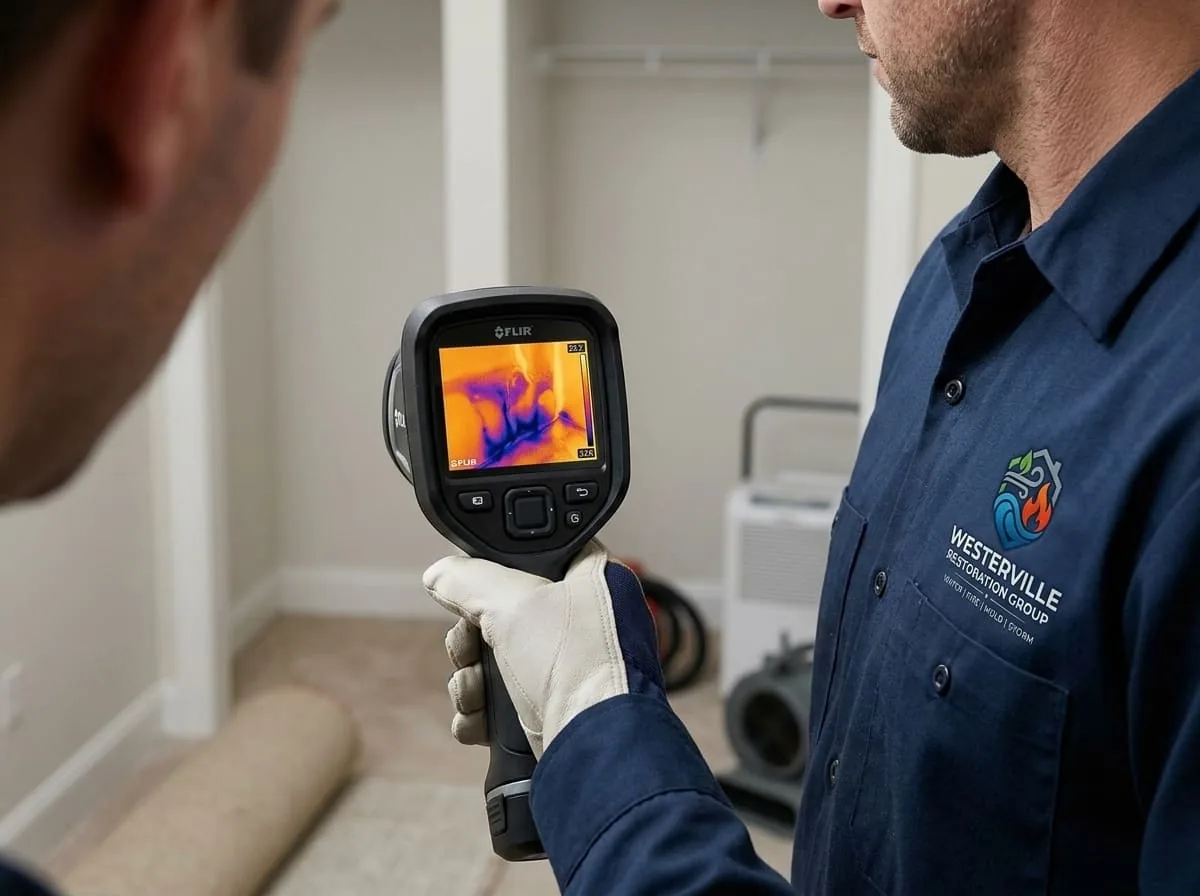
Professional moisture mapping uses penetrating and non-penetrating moisture meters to test materials at multiple points throughout the structure, not just where water was visibly seen. Thermal imaging cameras can also help identify temperature differences that often correspond to damp areas behind walls or under flooring, guiding where more direct moisture testing should happen. Together, this builds an accurate picture of exactly which materials are still wet before any rebuilding begins.
Why this step can't be skipped before reconstruction
Rebuilding over moisture that hasn't fully dried - closing a wall back up, installing new flooring, or painting over a stud that's still damp - traps that moisture in place and sets up conditions for mold and wood decay that surface again later, often after the reconstruction is finished and paid for. Confirming dry conditions with actual readings, not visual inspection, before closing anything back up avoids having to redo finished work.
Humidity makes this a bigger issue in some seasons than others
A fire that happens during a Central Ohio summer adds another variable: the same warm, humid air that slows ordinary drying also works against trapped fire-related moisture, giving it more time to sit in a favorable range for mold before it fully evaporates. That's one more reason moisture mapping and mechanical dehumidification, rather than simply opening windows and waiting, tend to be part of a fire-damaged home's drying plan.
Frequently Asked Questions
How is hidden moisture actually detected after a fire?
Restoration professionals use moisture meters at multiple points throughout affected areas, often paired with thermal imaging to identify likely damp spots before testing them directly. This combination finds moisture that a visual inspection alone would miss.
Can hidden moisture cause mold weeks after the fire is out?
Yes. Moisture trapped inside a wall cavity or under flooring can support mold growth well after the visible fire and water damage cleanup appears finished, particularly in a humid stretch of weather. This is exactly why moisture mapping happens before reconstruction, not just as an afterthought.
Should reconstruction wait until moisture readings confirm everything is dry?
Yes - closing up walls, installing flooring, or painting over materials that haven't been confirmed dry risks trapping moisture that causes problems later. Waiting for consistent dry readings before rebuilding protects the reconstruction work itself.
Rebuilding After a Fire?
Our restoration partners follow recognized industry standards for confirming a structure is fully dry before reconstruction begins.
Speak With a Restoration Team