
How Quickly Can Mold Become a Concern After Water Damage?
The 24-to-48-hour window that drives how fast professional drying needs to happen.
Last updated 2026-09
Mold spores are present in essentially every home already, waiting for the right conditions - moisture, warmth, and organic material to feed on. That's why the timeline after a water intrusion matters so much: mold can begin actively colonizing damp materials within roughly 24 to 48 hours under favorable conditions, and a Central Ohio summer's heat and humidity push those conditions toward favorable faster than a dry winter week would.
What actually speeds up or slows down the clock
A few conditions determine whether a water loss turns into a mold problem quickly or gives a homeowner more breathing room.
- Temperature - warm conditions (roughly 70-90°F) favor mold growth far more than cold ones
- Humidity - ambient humidity above roughly 60% creates conditions mold thrives in, common during Central Ohio summers
- Material type - organic, porous materials like drywall paper, wood, and carpet padding feed mold growth more readily than tile or concrete
- How much water intruded, and how long it sat before extraction and drying began
- Airflow - stagnant, enclosed spaces (a closed-up basement, for instance) stay damp longer than ventilated ones
Why this drives the urgency behind fast drying
The reason restoration professionals emphasize starting extraction and drying within hours rather than days isn't just about the water itself - it's about staying ahead of that 24-to-48-hour window before conditions turn favorable for mold. Once mold has a foothold in a wall cavity or under flooring, dealing with it requires a different, more involved process than simply drying the space would have.
What early mold growth can look like
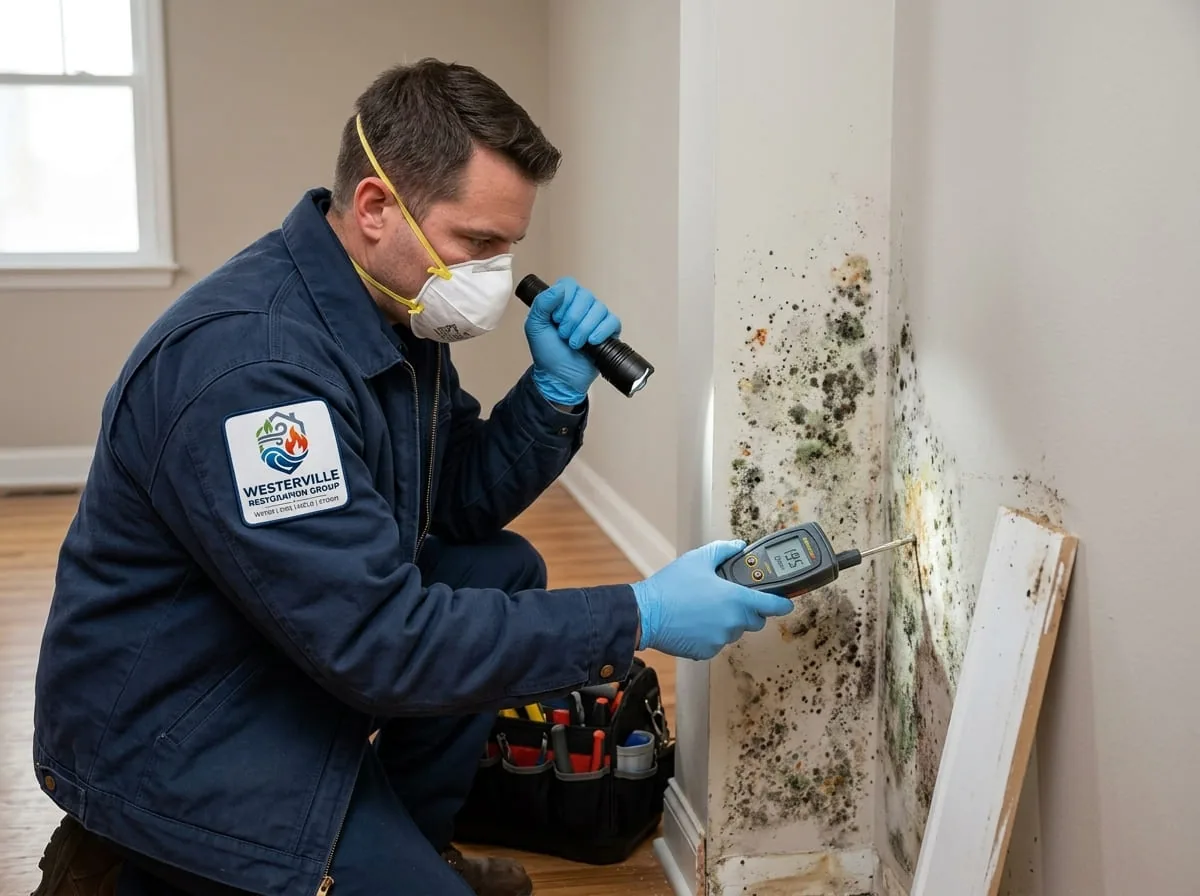
Early mold growth isn't always the dramatic black staining people picture - it can start as a faint musty smell, a slightly fuzzy or discolored patch in a corner, or a subtle change in a wall's appearance after it seemed to dry. These early signs are worth taking seriously rather than waiting to see if they get more obvious.
Why basements are especially vulnerable in this market
A basement that has flooded is often the worst-case setup for this timeline: it combines an enclosed, poorly ventilated space with the same warm, humid summer air that pushes conditions toward mold faster, plus finished materials like drywall and carpet that hold moisture well. That combination is part of why a flooded basement in Franklin or Delaware County needs the same drying urgency as a leak anywhere else in the home, even though it's easy to assume a basement will just air out on its own.
Frequently Asked Questions
Can mold be prevented entirely if drying starts fast enough?
Fast, thorough extraction and drying significantly reduces the risk, and is the single most effective thing that can be done. It doesn't guarantee zero risk in every case, especially with hidden moisture in wall cavities, but speed matters more than almost anything else in this equation.
Is all mold in a home dangerous?
Mold exposure affects people differently, and some species and situations pose more concern than others, but mold growth following water damage should always be taken seriously rather than assumed to be harmless. It's not a call to make casually.
Can I clean small mold spots myself?
A small amount of surface mold on a hard, nonporous surface - like tile or glass - can sometimes be wiped clean. Anything beyond a small, isolated spot, mold on a porous material, recurring mold, or mold that followed a significant water loss should be evaluated by a professional, since it often signals moisture or growth that isn't fully visible.
Worried About Mold After a Recent Water Loss?
Every call is routed to experienced restoration crews serving Westerville who understand exactly how fast that window closes.
Need Help Now? Call (614) 665-8102