Mold Remediation
Mold shows up fast after a leak, a flooded basement, or a humid Central Ohio summer — get matched with local remediation specialists who can assess it and start work quickly.
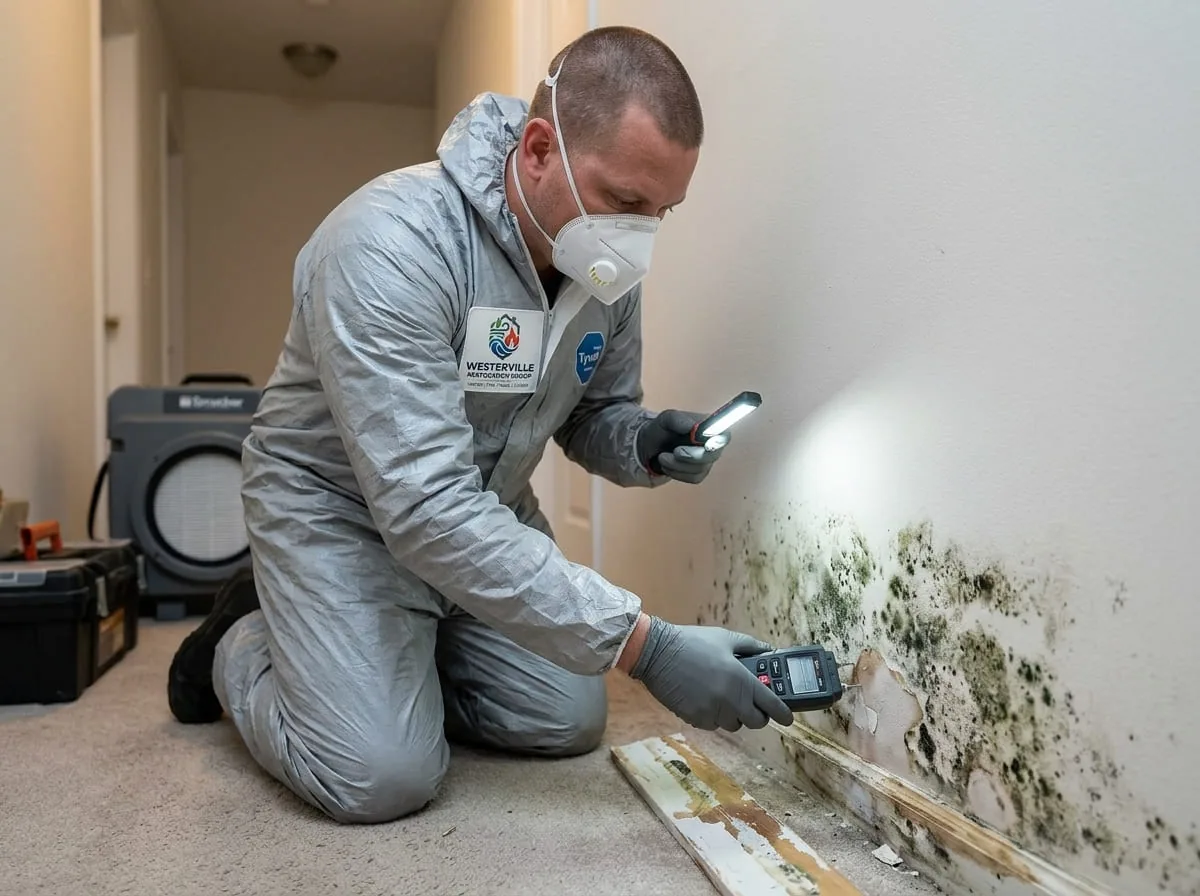
Mold rarely shows up on its own in a Westerville home. It follows a burst pipe, an overflowing sump pit, a slow roof leak, or the everyday condensation that builds up in a basement during a humid Ohio summer. Because most homes in this market are built over full basements rather than slabs, moisture has a below-grade space to collect in, and mold can take hold on damp drywall, framing, or carpet padding within as little as 24 to 48 hours.
This hub connects property owners in Westerville, Gahanna, Worthington, and the surrounding Franklin and Delaware County suburbs with mold remediation specialists who handle everything from a single damp closet to a fully finished basement that flooded during a storm. Calls are routed to professionals equipped to inspect the affected area, contain the space, and remove and treat what can't simply be dried.
Not every mold problem needs the same response. A small spot of surface mold on tile grout is a different situation than a musty smell coming from behind finished basement walls, and the pages below break out the most common scenarios so you can find the right starting point — or just call and describe what you're seeing.
Mold Remediation Services
Mold After Water Damage
How a burst pipe, appliance leak, or flooded basement can turn into a mold problem within days if it isn't dried properly.
Learn more →Basement Mold Remediation
Wall, sill-plate, and sump-pit mold in Central Ohio's basement-dominant housing stock, plus what finished basements need after any moisture intrusion.
Learn more →Black Mold Remediation
What dark or black-colored mold growth actually requires, and why color alone isn't enough to determine the right response.
Learn more →Commercial Mold Remediation
Mold in offices, retail space, or multi-tenant buildings, scoped and scheduled around ongoing business operations.
Learn more →Residential Mold Remediation
Mold in bathrooms, attics, and living spaces of Westerville-area homes, handled room by room.
Learn more →Mold Inspection
What to expect when a musty odor or past water damage calls for a professional look before any remediation begins.
Learn more →Mold Testing & Sampling
Air and surface sampling for situations where growth is suspected but not yet confirmed or visible.
Learn more →Post-Remediation Verification / Clearance Testing
Confirming a remediated space is ready to be closed back up, insured, or disclosed with documentation to back it up.
Learn more →Why Mold Is a Recurring Issue in Central Ohio Homes
Central Ohio's clay soils, freeze-thaw winters, and deep frost line push most local construction toward full poured concrete basements rather than the slab-on-grade homes common in warmer states — which means sump pumps are standard equipment, not an upgrade, and sump pump failure during a storm or power outage is one of the most common mold-triggering events in this market.
Add in warm, humid Central Ohio summers, and any water left sitting on drywall, subfloor, or framing has a narrow window before it becomes a mold problem rather than just a wet-material problem. That combination is why basement mold, attic condensation, and mold following a burst pipe or appliance leak are such regular calls in Westerville and the surrounding townships.
What a Professional Mold Response Typically Looks Like
Restoration work generally starts with an inspection to find the moisture source and how far mold has actually spread, since visible growth is often only part of the picture. From there, the space is typically contained to keep spores from moving into the rest of the home through stairwells or ductwork, materials that can't be cleaned are removed, and remaining surfaces are treated and dried with commercial-grade equipment.
- Inspection and moisture mapping
- Containment and air filtration
- Removal of unsalvageable materials
- Cleaning and treatment of structural surfaces
- Drying and, where appropriate, clearance testing
Residential and Commercial Situations This Network Handles
The pages below cover the most common Westerville-area scenarios, from a single bathroom or basement in a private home to a multi-tenant commercial building where mold in one unit's HVAC system can become a building-wide concern. Whichever situation matches yours, the professionals on the other end of the call are equipped to scope the job before any work begins.
Related restoration services
- Basement Water Damage / Flooded Basement Cleanup — Sump pump failure and foundation seepage are the leading causes of basement mold in this market, which makes fast water extraction the first line of defense.
- Mold Prevention & Moisture Control After Water Damage — This water-silo page covers the drying and moisture-control steps that determine whether a water loss turns into a mold problem in the first place.
- Emergency Water Damage Restoration — Because mold risk starts climbing within a day or two of a water loss, a fast emergency response is often what keeps a leak from becoming a remediation job.
Serving Westerville & Nearby Communities
Frequently Asked Questions
How quickly can mold become a problem after water damage in Westerville?
In Central Ohio's humid summer conditions, mold can begin developing on wet drywall, carpet, or framing within roughly 24 to 48 hours. That's part of why a fast water extraction and drying response matters as much as the mold remediation itself.
Is it safe to clean mold myself?
Small, isolated spots of surface mold on a hard, non-porous surface — tile grout or a windowsill, for example — can sometimes be wiped down with a household cleaner. Larger areas, mold on porous materials like drywall or carpet, recurring growth, or anything involving HVAC ductwork should be evaluated by a professional rather than handled with DIY methods, since improper handling can spread spores further into the home.
Will homeowners insurance cover mold remediation?
It depends on the cause and your specific policy — mold tied to a sudden, covered water loss is treated differently than mold linked to long-term neglect or an unaddressed leak. Documenting the damage and talking with your adjuster and the responding restoration professional is the best next step, since coverage isn't something that can be guaranteed in advance.
Do I need mold testing before remediation can start?
Not always. If mold is already visible, most remediation can proceed directly. Testing and sampling tend to matter more when growth is suspected but not visible, or when you need documentation for an insurance claim, real estate transaction, or post-remediation clearance.
Notice a Musty Smell or Signs of Mold?
Describe what you're seeing and get connected with a mold remediation specialist who can take it from there.
Need Help Now? Call (614) 665-8102