Mold Testing After a Water Loss: What the Process Actually Involves
When testing makes sense, and what actually happens during it.
Last updated 2026-09
Not every water loss needs formal mold testing - a small, fast-dried area with no lingering odor or visible growth usually doesn't require it. Testing earns its place when there's visible growth beyond a small area, a persistent musty smell without an obvious source, health-sensitive occupants in the home, or a need to confirm that a remediation job actually worked. Here's what the process itself typically involves.
Visual inspection and moisture mapping come first
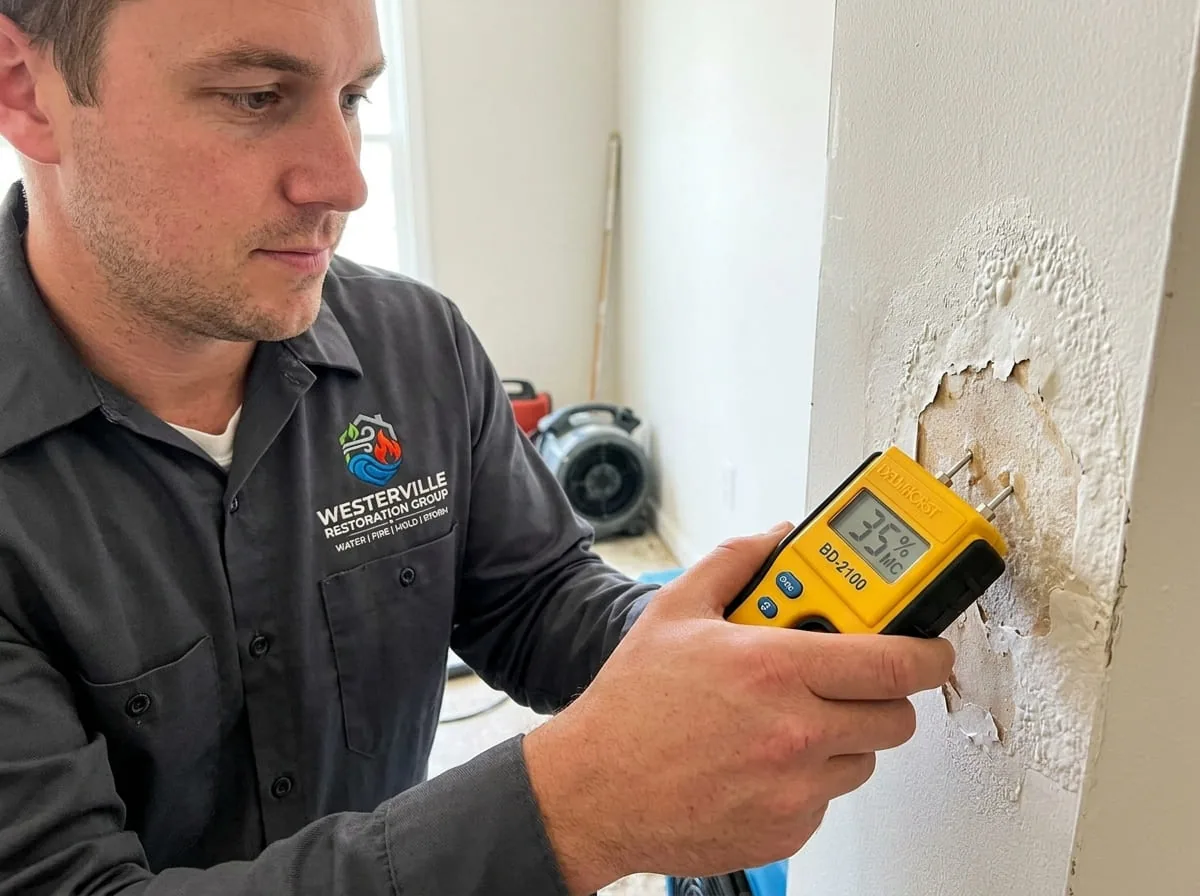
Before any samples are taken, an inspector typically walks the space, notes visible growth or water staining, and uses moisture meters to identify damp areas that might be feeding hidden growth. This step often narrows down where sampling will actually be useful, rather than testing at random.
Air sampling
Air sampling pulls a measured volume of air through a collection device to capture mold spores present in it. Samples are typically taken both inside the area of concern and outdoors (or in an unaffected area of the home) as a baseline comparison - since mold spores exist in outdoor air everywhere, the useful information is how indoor levels and spore types compare to that baseline, not whether spores are present at all.
Surface sampling
For visible growth, a swab, tape lift, or small physical sample can identify what type of mold is present on a specific surface. This is more targeted than air sampling and is often used to confirm what's growing on a particular material before deciding on a remediation approach.
Lab analysis
Collected samples go to an independent laboratory, which identifies spore types and concentrations and compares indoor findings against the outdoor baseline sample. Results typically take a few days to come back, which is worth planning around if testing is happening on any kind of timeline.
Post-remediation verification
After remediation work is complete, clearance testing - sometimes called post-remediation verification - confirms that mold levels in the treated area have returned to a normal range comparable to the rest of the home. This step is genuinely useful for confirming a remediation job actually worked, particularly before closing up walls or finishing repairs. Where possible, using an assessor independent from the company that performed the remediation avoids any conflict of interest in how the results are interpreted.
Frequently Asked Questions
Is mold testing always necessary after water damage?
No. A water loss that's extracted and dried quickly, with no lingering odor or visible growth, often doesn't need formal testing. Testing becomes more valuable when there's visible growth, a persistent unexplained odor, health concerns among occupants, or a need to verify remediation results.
How long does the mold testing process take?
The inspection and sample collection itself typically takes an hour or two, but lab analysis usually adds a few more days before results are available, so the full process is rarely a same-day answer.
What is post-remediation verification, exactly?
It's a follow-up test performed after mold remediation work is finished, confirming that spore levels and visible conditions in the treated area have returned to a normal range before the space is closed back up or considered finished.
Considering Mold Testing After a Water Loss?
Our restoration partners follow recognized industry standards for both remediation and the testing that confirms it worked.
Request Water Damage Service