
Mold Testing & Sampling
Air and surface sampling can confirm what's growing and how far it's spread when mold is suspected but not clearly visible.
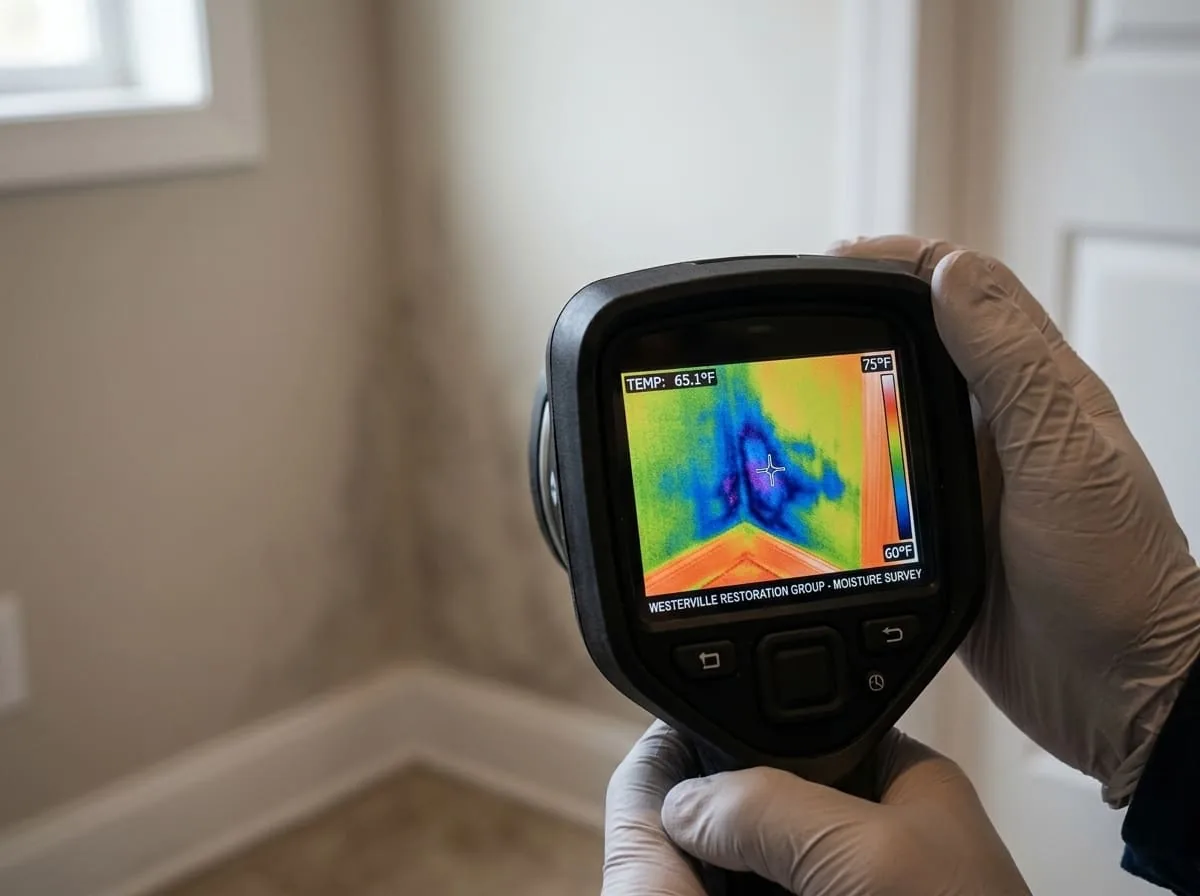
Mold testing isn't necessary for every situation — if you can already see growth, most jobs move straight to remediation. Testing and sampling earn their place when growth is suspected but hidden, when a property transaction calls for documentation, or when you want independent confirmation before or after a remediation job.
This page covers how mold sampling is typically collected in a residential or commercial setting, and what the results can and can't tell you.
When Mold Testing Makes Sense
A few situations call for sampling more than others.
- Growth is suspected — a musty smell, past water damage — but nothing is visible
- A real estate transaction requires documentation of indoor air quality
- You want independent verification after a remediation job is completed
- Occupants have concerns that need more information than a visual inspection alone provides
How Mold Sampling Is Typically Collected
Sampling usually involves air samples pulled from inside the property and compared against an outdoor control sample to establish a baseline, along with surface samples — swabs or tape lifts — taken directly from suspect areas. Samples are then sent to an independent lab for analysis rather than evaluated on-site.
Because outdoor air always carries some level of naturally occurring mold spores, the point of the outdoor comparison sample is to give the indoor results context, not to suggest that any presence of mold indoors is automatically abnormal.
What Test Results Can and Can't Tell You
Lab results identify what's present and in what relative concentration, but interpreting what that means for a specific property is something a qualified professional needs to do in context — there isn't a universal number that separates a "safe" reading from an "unsafe" one. Results are most useful when read alongside the inspection findings, the building's history, and the materials involved, rather than on their own.
Frequently Asked Questions
Is mold testing required before remediation can start?
No, not in most cases. Visible mold growth is generally remediated directly without a testing step first. Testing tends to matter more for hidden or disputed situations, or when documentation is needed for other reasons.
How reliable are the mold test kits sold at hardware stores?
Consumer test kits often can't reliably distinguish between mold species or determine whether a level found is actually a concern for a given property. Professional sampling with independent lab analysis gives a more dependable read, particularly if the results might matter for an insurance claim or a real estate transaction.
Will test results tell me if my home is safe?
Test results show what's present and roughly how much, but they aren't a simple pass-or-fail safety verdict. A qualified professional interprets those results alongside the inspection findings and the specific situation rather than reading a single number in isolation.
How long does it take to get mold test results back?
Lab turnaround time varies by the lab and the type of sample, so there's no fixed timeframe that applies to every test. It's a reasonable question to ask upfront when sampling is scheduled.
Related services
Nearby service areas
Need to Confirm Whether Mold Is Actually Present?
Get matched with a specialist who can collect and interpret air or surface samples correctly.
Request Water Damage Service