
Storm & Rain Water Damage in Westerville, OH
Central Ohio's spring and summer storm season brings damaging wind, heavy rain, and the occasional hail, and Westerville's basement-heavy housing stock means a lot of that water ends up below grade.
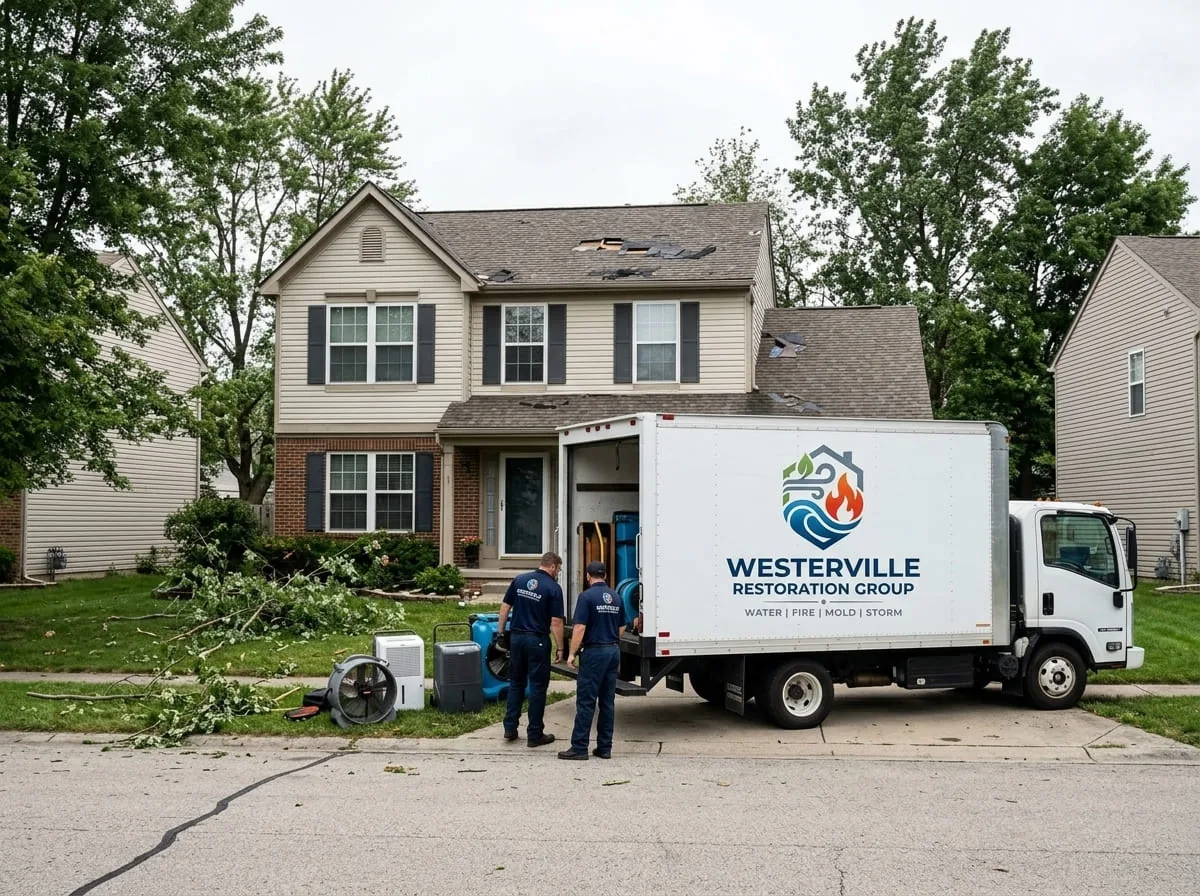
Central Ohio experiences tornado activity at a modest, non-hotspot rate, but severe thunderstorms bringing damaging straight-line wind, heavy rain, and hail are a regular part of the spring and summer storm season here. Franklin County has recorded dozens of confirmed tornadoes over the decades, including a February 1971 EF3 that struck Columbus's east side, so the risk isn't zero, but the more frequent problem for Westerville-area properties is water, not wind.
Big Walnut Creek runs directly through Westerville on its way from the Hoover Reservoir dam outflow toward Gahanna and Whitehall, which means heavy regional rainfall affecting the reservoir's watershed has a direct line to localized flooding risk along that corridor. For most homeowners, though, the storm damage that actually shows up is a flooded basement, not a creek overflowing its banks.
How Storms Cause Water Damage in This Market
Storm-related water damage in Westerville tends to follow a few predictable patterns, and more than one of them can happen during the same storm.
- Sump pump failure when a storm also causes a power outage
- Heavy rain overwhelming yard grading and window wells
- Wind-driven rain forced under roofing or around flashing
- Downed limbs or debris damaging a roof and allowing water intrusion
- Localized flooding near Big Walnut Creek during high-flow periods
Power Outages Turn Storms Into Sump Pump Emergencies
A standard sump pump depends on electricity, and severe thunderstorms are one of the more common causes of local power outages in this region. When a storm knocks out power at the same time it's dropping heavy rain, a basement that would normally stay dry can flood simply because the pump has no power to run, even if the pump itself is in good working order.
This combination, heavy rain plus a power outage, is one of the most frequent basement-flooding scenarios reported in the Westerville area, and it's worth keeping in mind that a battery backup or water-powered backup pump addresses exactly this failure mode.
Cleanup After Storm Damage
Once a storm has passed, cleanup follows a similar path regardless of whether the water came from a failed sump pump, a roof leak, or rising water near a creek. Standing water gets extracted, moisture gets mapped through walls and flooring, and drying equipment goes in to bring the structure back to a safe moisture level before mold becomes a second problem.
Frequently Asked Questions
Does homeowners insurance cover storm-related water damage?
It depends on the specific cause. Wind-driven rain damage to a roof is often covered differently than sump pump failure or rising floodwater, and true flood damage from a creek or river typically requires separate flood insurance. Documenting the damage thoroughly helps regardless of which coverage applies.
Should I run my sump pump on a generator during a storm-related outage?
If you have a generator rated for it and are comfortable operating it safely outdoors, away from windows and doors, it can keep a sump pump running during an outage. If you're not experienced with generator setup, it's safer to wait for power to be restored or call a professional than to risk an electrical or carbon monoxide hazard.
How common is tornado damage in the Westerville area compared to storm flooding?
Tornadoes do happen in Central Ohio, but at a modest rate compared to more tornado-prone regions of the country. Heavy-rain and sump-pump-related basement flooding is a far more frequent cause of storm-related water damage calls in this market than wind or tornado damage.
Related services
Nearby service areas
Storm Just Passed Through?
A restoration crew can check for hidden moisture and get drying equipment placed before the humidity does more damage.
Speak With a Restoration Team