
Water Extraction & Water Removal in Westerville, OH
Standing water in a Westerville basement or first floor keeps soaking into subfloor and framing for as long as it sits, which is why extraction is the first job on almost every water damage call.
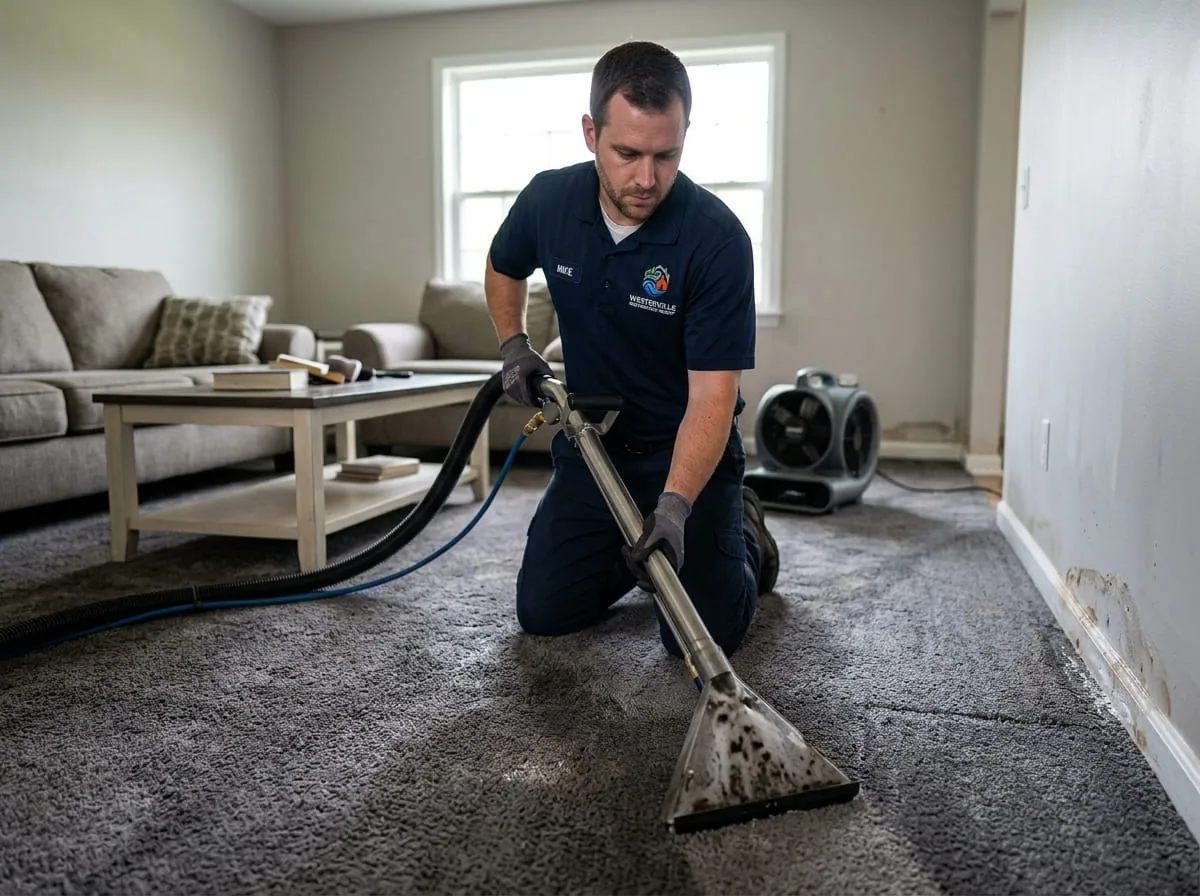
Whether it's an inch of water spread across a finished basement after a sump pump failure or several rooms flooded from a burst supply line, the first job on any water damage call is getting the standing water out. This page covers the extraction process used by restoration professionals dispatched to Westerville, Gahanna, Orange Township, and the surrounding Franklin and Delaware County suburbs.
Extraction speed matters more in this region than a lot of homeowners realize. Between the area's basement-heavy housing stock and its humid summers, water that sits for even a day or two has a real chance of soaking into wall cavities and subfloor before anyone notices, which turns a removal job into a demolition job.
Equipment Used for Water Removal
The right equipment depends on how much water is involved and where it's sitting. A small appliance leak might only need a portable extraction unit, while a flooded basement typically calls for submersible pumps to handle bulk water followed by truck-mounted extraction to pull moisture out of carpet, pad, and hard flooring.
- Submersible pumps for several inches or more of standing water
- Truck-mounted extraction units for carpet, pad, and upholstery
- Portable extractors for tight spaces like closets and stairwells
- Moisture meters to check subfloor, drywall, and framing after visible water is gone
- Thermal imaging in some cases to spot moisture hidden behind walls
Extraction Is Only the First Step
Removing visible water doesn't mean a structure is dry. Moisture mapping after extraction identifies which materials absorbed water and how deep it traveled, which determines whether drywall, insulation, or subfloor needs to come out or can be dried in place. This step is also where the restoration crew starts the documentation an insurance claim usually requires, recording moisture readings room by room as drying equipment goes in.
Basements Need a Different Approach
Because poured concrete basements are the standard foundation type across Westerville and the surrounding suburbs, a large share of extraction calls involve below-grade space. Water in a finished basement often pools against exterior walls or around a failed sump pit, and it can hide under carpet pad or laminate flooring longer than water on a main-floor tile surface would. Extraction crews working basements typically check behind baseboards and under flooring edges specifically because of this pattern.
Frequently Asked Questions
How long does water extraction usually take?
A single room with a few inches of water might take under an hour to extract, while a fully flooded basement can take considerably longer depending on square footage and how much furniture or flooring has to be moved. Extraction is typically just the first phase, with structural drying continuing over the following days.
Can I extract water myself with a wet/dry vacuum before help arrives?
For a small, contained spill away from any electrical outlets or appliances, a shop vac can help slow the spread. Avoid this if the water is anywhere near outlets, is more than an inch or two deep, or could be contaminated (from a sewage backup, for example), and let a professional handle those situations instead.
Does extraction remove the risk of mold?
Extraction removes the standing water, but materials that absorbed moisture still need to dry fully to bring mold risk down. That's why moisture mapping and structural drying typically follow extraction rather than treating the job as finished once the visible water is gone.
Related services
Nearby service areas
Standing Water Won't Wait to Spread
The sooner extraction starts, the more of your flooring, drywall, and subfloor has a chance of being saved.
Get Emergency Water Removal