
What to Do Immediately After Finding Water Damage
A calm, ordered checklist for the minutes right after you notice water where it shouldn't be.
Last updated 2026-09
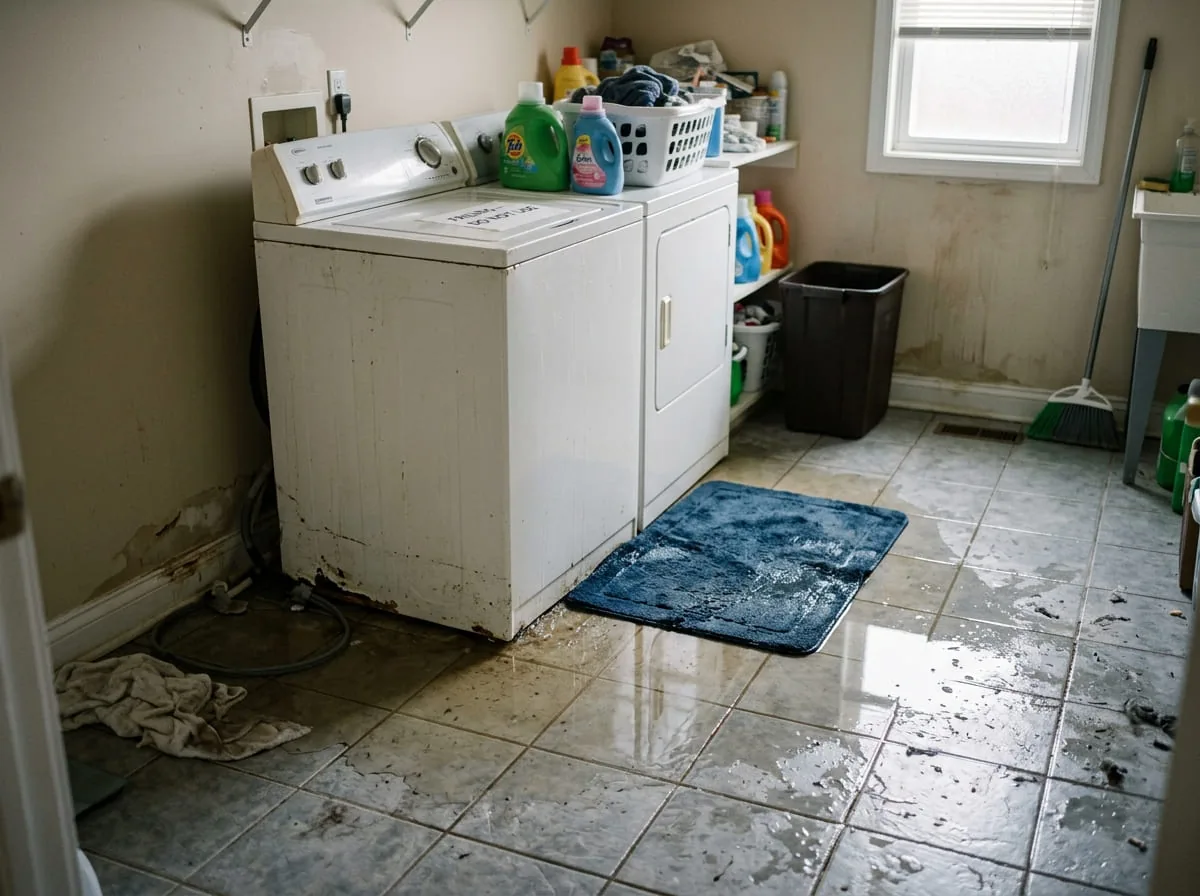
Finding water pooling in a hallway, dripping through a ceiling, or spreading across a basement floor sets off an instinct to grab a mop and start cleaning. Resist that instinct for a moment. The order of operations in the first thirty minutes - safety, then the source, then documentation, then cleanup - determines whether the damage stays contained to one room or spreads into framing, flooring, and subfloor that has to be torn out later.
None of the steps below require special equipment. They're about making good decisions quickly, in roughly the order a homeowner should make them, before restoration professionals take over the parts of the job that need extraction equipment, moisture meters, and industrial dehumidifiers.
1. Check for electrical hazards before you step in
Standing water near outlets, light fixtures, or a water heater's electrical connections is a genuine shock hazard. If water is anywhere near an electrical panel, outlets below the waterline, or appliances that are still plugged in, do not wade in to unplug them. Shut off power to the affected area at the breaker panel if it can be reached without stepping through water, and if there's any doubt, treat the area as off-limits until a licensed electrician or restoration professional confirms it's safe.
2. Stop the source, if it's safe to do so
A supply line under a sink, a washing machine hose, or a toilet supply valve can usually be shut off at a small valve right at the fixture - turn it clockwise. For a bigger problem, such as a burst pipe or an unidentified source, shutting off the home's main water valve is the faster move. If the source is a roof leak, storm intrusion, or something outside the home's plumbing, containment (buckets, towels, moving items out of the path) matters more than trying to stop water you can't reach.
3. Document before you touch anything
Photos and a short video walkthrough, taken before any water is removed or items are moved, are the single most useful thing a homeowner can do for an eventual insurance claim. Capture the water source, the affected rooms from multiple angles, and any damaged belongings. A phone's timestamp is usually enough - there's no need for anything elaborate.
4. Move what you can, remove standing water where it's safe
Lift furniture legs onto blocks or foil, pull up area rugs, and move electronics, boxes, and anything porous off the wet floor. If the water is clean (a supply line, not a sewage backup) and there's no electrical hazard, a wet/dry shop vacuum can remove standing water from a small area. Leave carpet padding, drywall, and larger-scale extraction to restoration equipment - a shop vac pulls surface water but does very little for what has already soaked into padding, subfloor, or wall cavities.
- Skip this step entirely if the water is from a toilet backup, sewage line, or floodwater
- Open windows or run a fan if it's safe and the outside air is drier than the room
5. Call for professional assessment sooner rather than later
Materials that stay wet for more than a day or two, especially in the humidity of a Central Ohio summer, move quickly from "water damage" to "water damage plus mold risk." Restoration professionals bring moisture meters that read what's happening inside walls and under flooring, not just what's visible - that's the difference between drying a room correctly and leaving a hidden pocket of moisture that causes problems weeks later.
Frequently Asked Questions
Should I call my insurance company or a restoration company first?
Either order works, but don't wait on one to start the other. Photograph the damage right away, then contact a restoration company to begin mitigation - most policies expect reasonable steps to prevent further damage - and loop in your insurer as soon as you're able. Restoration professionals routinely document damage in a way that supports the claims process.
Is it safe to stay in the house after finding water damage?
In most single-room, clean-water situations, yes. It's not safe if there's standing water near live electrical circuits, if the water source is sewage or floodwater, or if a ceiling is sagging from trapped water above it - a sagging ceiling can collapse. When in doubt, stay out of the affected area and have it assessed.
Can I just run fans and let it dry on its own?
Fans help with surface moisture in a small, clean-water incident, but they don't address moisture trapped inside walls, under flooring, or in insulation. Air-drying without professional moisture readings often looks finished on the surface while leaving damp material behind - a common setup for mold weeks later.
Related services
Found Water Damage Right Now?
Access to IICRC-certified restoration expertise is one call away, any hour of the day or night.
Need Help Now? Call (614) 665-8102