
Why Does My Basement Keep Flooding?
The real reasons Central Ohio basements flood again and again, and who to call for each one.
Last updated 2026-09
A poured concrete basement is the default foundation type across Westerville and the surrounding Franklin and Delaware County suburbs - a response to the region's clay soils, freeze-thaw winters, and a frost line that requires deep footers anyway. That makes basement flooding one of the most common water-loss calls in this market, more common than river or creek overflow reaching a structure directly, and it's rarely a one-time fluke. If a basement has flooded more than once, there's usually a specific, fixable reason behind it.
Sump pump failure
Sump pumps are a standard feature in this area's basements, and pump failure during heavy rain is one of the single most common basement-flooding causes homeowners deal with locally. A pump can fail because the motor wears out, the float switch sticks, the discharge line freezes or gets clogged, or - often the worst-timed failure of all - the power goes out during the same storm that's overwhelming the system. A battery backup or water-powered backup sump pump addresses the power-outage scenario specifically, and routine testing (lifting the float by hand to confirm the pump kicks on) catches a lot of failures before they matter.
Foundation seepage and hydrostatic pressure
Central Ohio's clay soil holds water and drains slowly, so after heavy or prolonged rain, saturated soil around a foundation builds up hydrostatic pressure - water pressure pushing against basement walls and the slab. That pressure can force water through hairline cracks, cove joints (where the wall meets the floor), and porous concrete, even without any single dramatic failure point. This tends to show up as damp walls, efflorescence (a white mineral residue), or water seeping in along the floor's edge during or after a heavy rain event.
Window wells
Basement window wells are a frequent, underrated source of leaks. A clogged well drain, a missing or damaged well cover, or a well that simply fills faster than it can drain during a heavy downpour all send water directly against a below-grade window, which often isn't sealed to handle standing water. Clearing debris from well drains and adding a properly fitted cover are simple, low-cost fixes that address a surprising share of basement leaks.
Grading and downspouts
Where roof and yard water goes matters as much as how the foundation itself is built. Downspouts that dump water within a few feet of the foundation, splash blocks that are too short, and yard grading that slopes toward the house instead of away from it all funnel water straight to the one place it shouldn't go. Extending downspouts several feet away from the foundation and correcting negative grading near the house are often the highest-value, lowest-cost fixes available.
When to call a plumber versus a restoration professional versus a foundation specialist
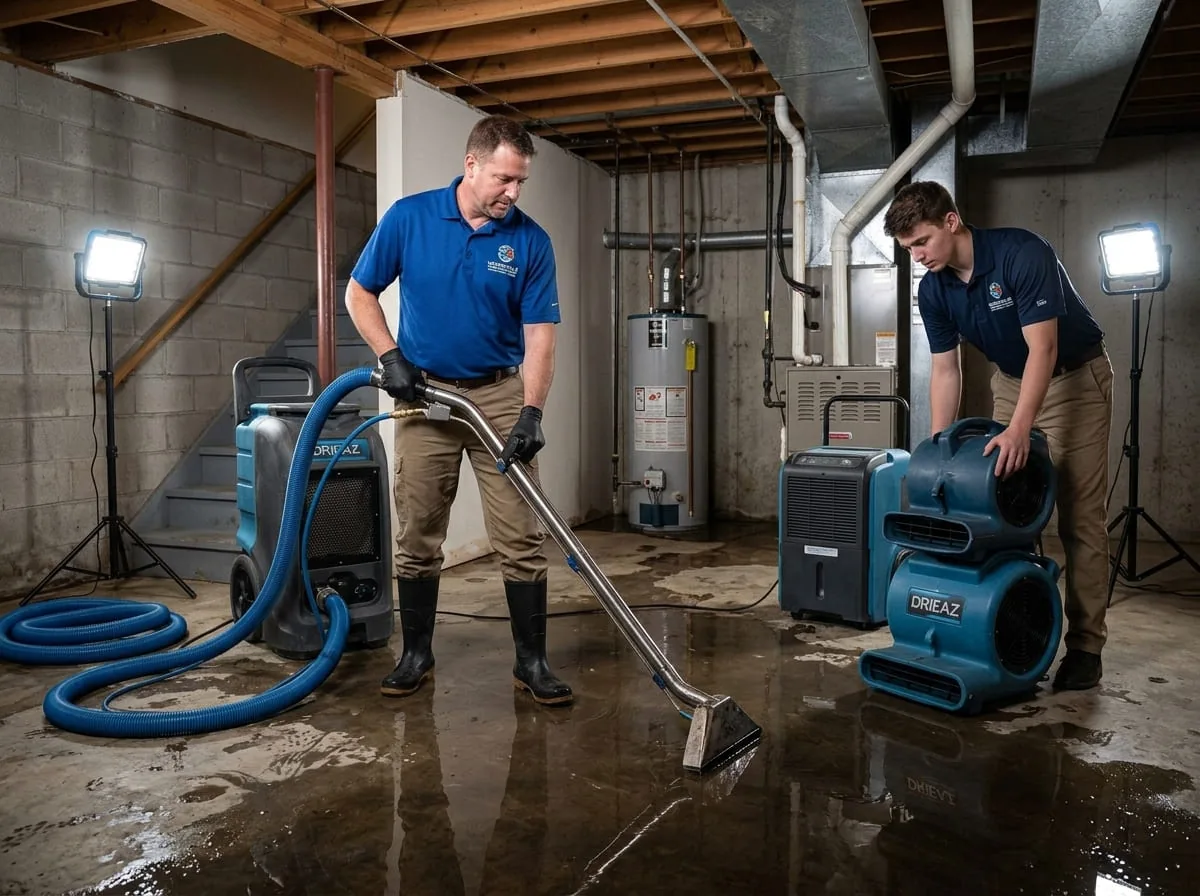
Each of these causes points to a different kind of help. A failed or malfunctioning sump pump, or a clogged drain line, is a job for a plumber. Persistent seepage through walls or cove joints that keeps recurring despite grading and drainage fixes usually calls for a foundation or waterproofing specialist who can address the water at its source with tools like an interior drain tile system. And once flooding has actually happened - regardless of the cause - a water damage restoration professional handles the extraction, drying, and mold-prevention side of the cleanup, which a plumber or foundation contractor typically isn't equipped to do.
Frequently Asked Questions
Is sump pump failure covered by homeowners insurance?
Often not by a standard policy. Water backup and sump pump failure coverage is frequently a separate endorsement that has to be added - worth checking given how central sump pumps are to basements in this area.
What's the single most effective thing I can do to reduce basement flooding risk?
For most homes, extending downspouts away from the foundation and correcting grading near the house address a meaningful share of basement moisture problems, and cost far less than foundation waterproofing. Pair that with a battery backup for the sump pump to cover power-outage scenarios during storms.
Is a flooded basement a mold risk even after it's dried?
Yes, especially with Central Ohio's humid summer stretch - damp basement materials left standing in warm, humid conditions can start supporting mold growth within 24 to 48 hours. A basement that has flooded should be professionally dried and checked, not just mopped up and left to air out.
Basement Flooded Again?
Every call is routed to experienced restoration crews serving Westerville, equipped to extract and dry a basement correctly the first time.
Get Emergency Water Removal