
Water Damage Restoration in Worthington, OH
Worthington's history dates to 1803, and its genuine historic core sits alongside decades of mid-century and later development, a wide range of housing ages that all share Central Ohio's basement-standard construction.
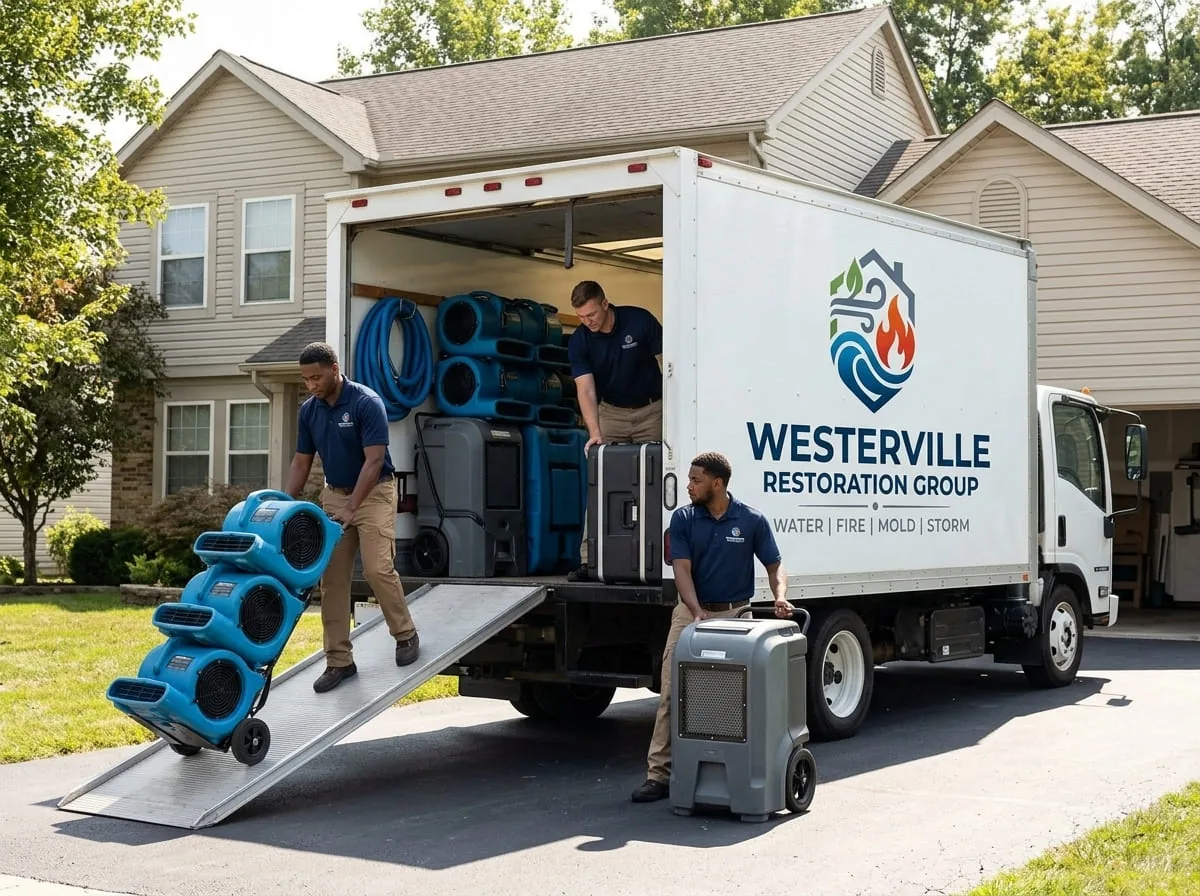
A community with roots reaching back to 1803 carries a correspondingly wide range of building eras, and Worthington's genuine historic core is the oldest example of that range in this service area. Homes in and around that older core are the most likely in the region to still be running some portion of original or long-aged supply line, simply because they have had the most decades in the ground to age.
The neighborhoods built up around that historic core during Worthington's mid-20th-century and later growth represent the same broad range of plumbing materials and ages found across the rest of Central Ohio, some galvanized, some updated, some newer copper or PEX, depending on when a given block or subdivision went in.
Basements are the standard foundation type across Worthington regardless of a home's age, consistent with Central Ohio's clay-soil and frost-line building pattern. That means both a home dating close to Worthington's historic roots and a home from a later development share the same underlying basement and sump pump exposure, even though their plumbing may fail differently.
Worthington's status as a well-known, established Columbus-area community, founded decades before Westerville itself, means restoration professionals responding here regularly work across that full age range in a single week, from a 19th-century foundation wall to a sump pit installed in a home built within the last few decades.
Central Ohio's climate treats every part of that age range the same way: hard winter freezes stress old and new supply lines alike, and humid summer conditions put any standing moisture, in a century-old basement or a recently finished one, on the same short clock before mold becomes a real concern.
Worthington's status as one of the older, more established communities in this service area also means a meaningful share of its housing stock has been through at least one prior renovation, which can complicate a water damage assessment when newer finishes sit over original materials that behave differently once wet.
Water Damage Restoration in Worthington
Worthington's mix of genuinely old housing stock and later suburban development means restoration professionals see a wide range of water damage causes across the city, from original supply line failures in the oldest homes to appliance and connector failures in more recently built ones.
Basement flooding is a standard call throughout Worthington, whether the trigger is a failed sump pump, seepage through aging foundation walls in the older core, or a water heater failure in a more recently built home. Central Ohio's basement-dominant construction means this pattern holds across the city's full range of building eras.
Winter freeze-thaw cycling is a particular concern for Worthington's older housing stock, where supply lines running through exterior walls, older additions or unheated spaces are more exposed to hard freezes than lines in more recently built, better-insulated construction.
Restoration work in Worthington typically combines water extraction with structural drying, and older homes sometimes require more careful moisture monitoring given original plaster, lath, or older flooring materials that behave differently than modern building products during drying.
Sump pump failure and foundation seepage remain common basement water damage causes even in Worthington's oldest sections, since a basement is a basement regardless of the era it was poured in, and the sump systems installed in older homes are subject to the same mechanical and power-loss failure points as anywhere else.
Appliance and water heater failures affect Worthington homes of every age, and in older properties, an aging water heater or an older washing machine supply line is sometimes the actual cause behind what first looks like a foundation or plumbing problem.
Ceiling and wall water damage is a common secondary effect in Worthington homes with a roof leak or an upper-floor plumbing failure, since water traveling down through an older home's structure can affect plaster ceilings and walls well below where the original leak occurred.
Fire Damage Restoration in Worthington
Fire damage in Worthington's older homes can involve building materials, plaster walls, older wood trim, original flooring, that respond differently to smoke, soot and firefighting water than materials used in more recently built homes.
Regardless of a home's age, firefighting water left behind after a fire is extinguished typically needs the same structural drying attention as the visible fire and smoke damage.
Board-up and tarping are often needed to secure an older Worthington home immediately after a fire, particularly where original windows, doors or roofing materials were compromised and need protection from further weather exposure before repairs begin.
Contents cleaning and pack-out matter in a Worthington fire response too, since older homes sometimes hold furnishings and belongings that call for more careful handling during cleaning and storage than typical modern replacements would.
Mold Remediation in Worthington
Mold risk after a water event in Worthington's older homes can be complicated by original wall and floor materials that hold moisture differently than modern building products, which is part of why identifying the extent of moisture intrusion matters before remediation begins.
In Worthington's more recently built neighborhoods, mold following a basement flood or slow leak tends to follow the same pattern seen throughout Central Ohio, a real risk within 24 to 48 hours of standing moisture in a warm, humid environment.
A mold inspection in an older Worthington home may need to account for renovations layered over the decades, since newer drywall or flooring installed over original materials can hide moisture problems that started well before the current finish went in.
Post-remediation verification, confirming through testing that a treated area has actually been brought back to an acceptable condition, can be particularly useful in older homes where past renovations make a simple visual check less reliable on its own.
Restoring Homes Near Worthington's Historic Core
A community with roots reaching back to 1803 carries a correspondingly wide range of building eras, and Worthington's genuine historic core is the oldest example of that range in this service area. Homes in and around that older core are among the most likely in the region to still be running some portion of original or long-aged supply line, simply because they have had the most decades in the ground to age.
Restoration work in homes from this era sometimes involves original plaster, lath, or older flooring materials that behave differently than modern drywall and engineered flooring during drying, which is part of why moisture monitoring matters as much as the initial extraction.
Documenting a Water Loss for Insurance
Sudden and accidental water damage, such as a burst pipe, is often covered under a standard homeowners policy, while gradual leaks and pre-existing plumbing problems are typically excluded. That distinction matters more in older housing stock, where a slow, long-developing leak is more plausible than in newer construction.
Photographing the damage, noting when it was discovered, and keeping records of any repair estimates or receipts all help support a claim regardless of a home's age.
Balancing Speed and Care in Older Homes
Fast water extraction matters in any restoration response, but an older Worthington home sometimes calls for a more measured approach once the bulk of the water is out. Original plaster walls, older wood trim and vintage flooring can be damaged by drying equipment used too aggressively, in the same way they can be damaged by moisture left too long.
That balance, moving quickly enough to limit damage while handling older materials with appropriate care, is part of what separates a straightforward extraction job from a full restoration response in a home with genuine age to it.
Sump Pumps in Homes That Predate Them
Sump pumps are a relatively modern addition to residential construction, which means a number of Worthington's older basements were originally built without one and had a sump pit and pump added later, sometimes decades after the home itself was built.
A retrofitted sump system can work just as well as one installed during original construction, but it's worth a homeowner knowing whether their pump was original to the house or added later, since that history can be useful context if a failure or recurring seepage problem comes up.
From Extraction to Repair: What a Full Restoration Involves
A Worthington water loss typically moves through a few distinct phases: stopping the water source where possible, extracting standing water, then structural drying and dehumidification until moisture readings confirm the space is actually dry, not just dry to the touch.
Once drying is complete, repairs, replacing damaged drywall, flooring or trim, are usually handled as a separate phase from the emergency response itself, which gives a homeowner time to make decisions about materials and finishes without that choice being rushed by ongoing water exposure.
Worthington Water Damage FAQs
Does Worthington's older housing stock mean more water damage risk?
Age adds some risk factors, particularly original or long-aged supply lines that are more prone to failure, but basement flooding from sump pumps and seepage is common across homes of every age in Worthington, not just older ones.
Are basements common in Worthington's historic core?
Basements are the standard foundation type across Central Ohio, including Worthington's older neighborhoods, consistent with the region's clay soils and frost-line building requirements.
What water damage risks are specific to older homes?
Older homes are more likely to have original or aging supply lines exposed to winter freeze-thaw cycling, and may have plaster, lath or older flooring materials that require more careful handling during drying than modern materials. A prior renovation can add another layer, since newer drywall or flooring installed over original materials sometimes hides how water is actually moving through the structure.
How long does structural drying take after a basement flood?
It depends on how much water intruded, what materials were affected, and how quickly extraction began. Professional drying equipment and moisture monitoring are used to confirm materials are actually dry rather than just visibly dry.
Will insurance cover a burst pipe in an older Worthington home?
Sudden and accidental water damage, like a burst pipe, is often covered under standard homeowners policies, though gradual leaks and pre-existing plumbing problems are typically excluded. Reviewing the specific policy is the only way to know for certain.
What should I do first if I discover a water leak in an older home?
If it's safe, shut off the water supply to the affected area or the home's main shutoff, avoid contact with any water near electrical sources, and photograph the damage before starting cleanup. This applies whether the property sits inside Worthington's historic core or in one of its later subdivisions, since dispatch and response both work from the property itself rather than its age or location within the city.
Nearby Service Areas
Get Water Damage Help in Worthington
From original supply line failures near the historic core to sump pump issues in newer sections, water damage calls from Worthington are routed to a restoration professional ready to respond.
Request Water Damage Service